
The right worktop should fit seamlessly into your kitchen scheme, providing not only a stylish finish, but practical benefits too. The choice can be baffling, with a multitude of materials on offer – from affordable laminate to high-end stone – most of which are available in a huge selection of colours and patterns.
Read on for our advice on how to make the best choice for your project, taking into account your kitchen habits as well as balancing budget with aesthetic.
- Want a high-spec design kitchen but don’t have the budget to match? This is how to make your basic kitchen look bespoke
- This Interior Design Masters contestant used the most ingenious IKEA hack in her own kitchen
1. Laminate
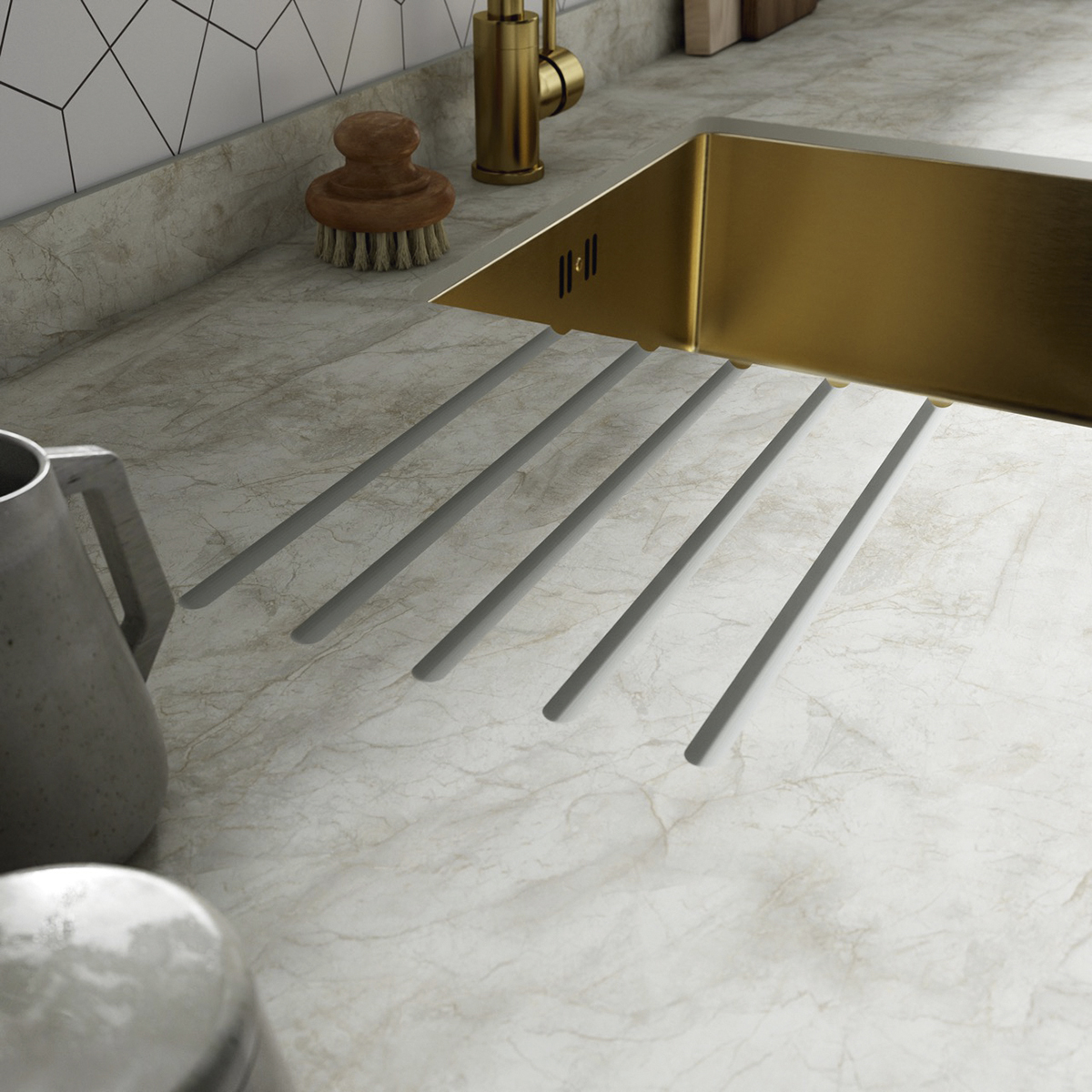
Typically the most affordable option for work surfaces, laminate is a popular choice, says Emma-Louise, product manager at Bushboard. ‘You can expect to pay from as little as £250 for a standard three-metre run. Laminate can be up to 85% cheaper than some natural surfaces such as quartz and stone, saving many people well over £1,000 for a typical worktop.’
Modern, high-quality laminates are quick and easy to install, and boast a durable top layer that’s both waterproof and scratch-resistant. Another bonus is the huge selection of designs, which can give the look of other materials at a fraction of the cost. They require hardly any maintenance, but you will need to protect the surface from heat damage.
2. Composite
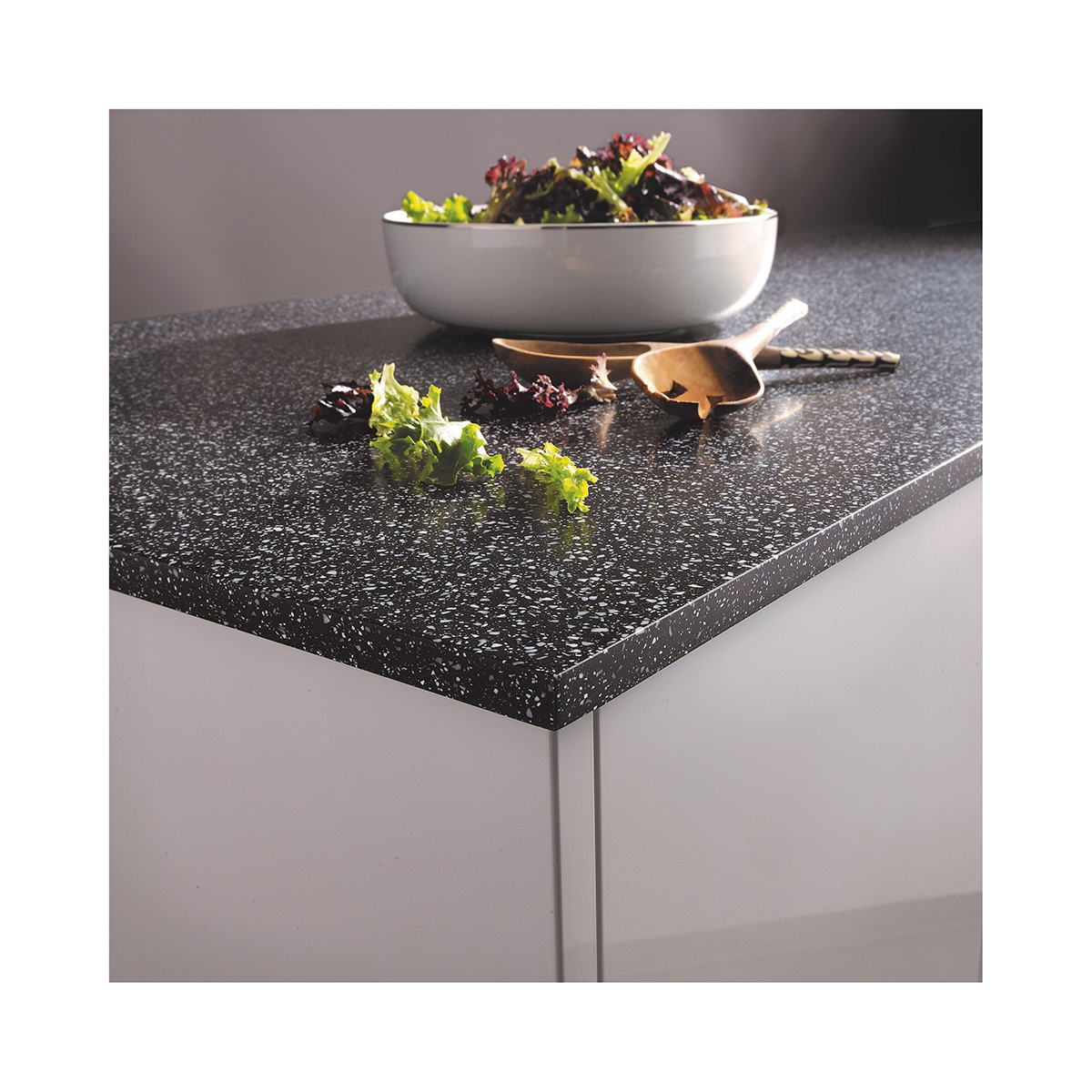
Solid surface worktops, also known as composites, are generally made from a blend of synthetic resins, minerals and pigments, making them more affordable than natural stone. ‘Composite is stylish and versatile, with a wide range of colours and patterns that can closely mimic stone,’ says Alex Peters, cost guide expert at Checkatrade.
It has many practical benefits, too. ‘It’s durable, resistant to scratches and stains, very hygienic and relatively low-maintenance. It doesn’t need sealing – just regular gentle cleaning.’
Composites, such as Corian, can be expensive to install, so keep fitting costs in mind when budgeting for your project. Due to the nature of composites, they can be moulded to any shape and you can even install a nifty wireless charging point within your worktop.
‘On average, a five-metre length of composite worktop can cost between £1,200 and £2,000 including installation,’ adds Alex.
3. Granite
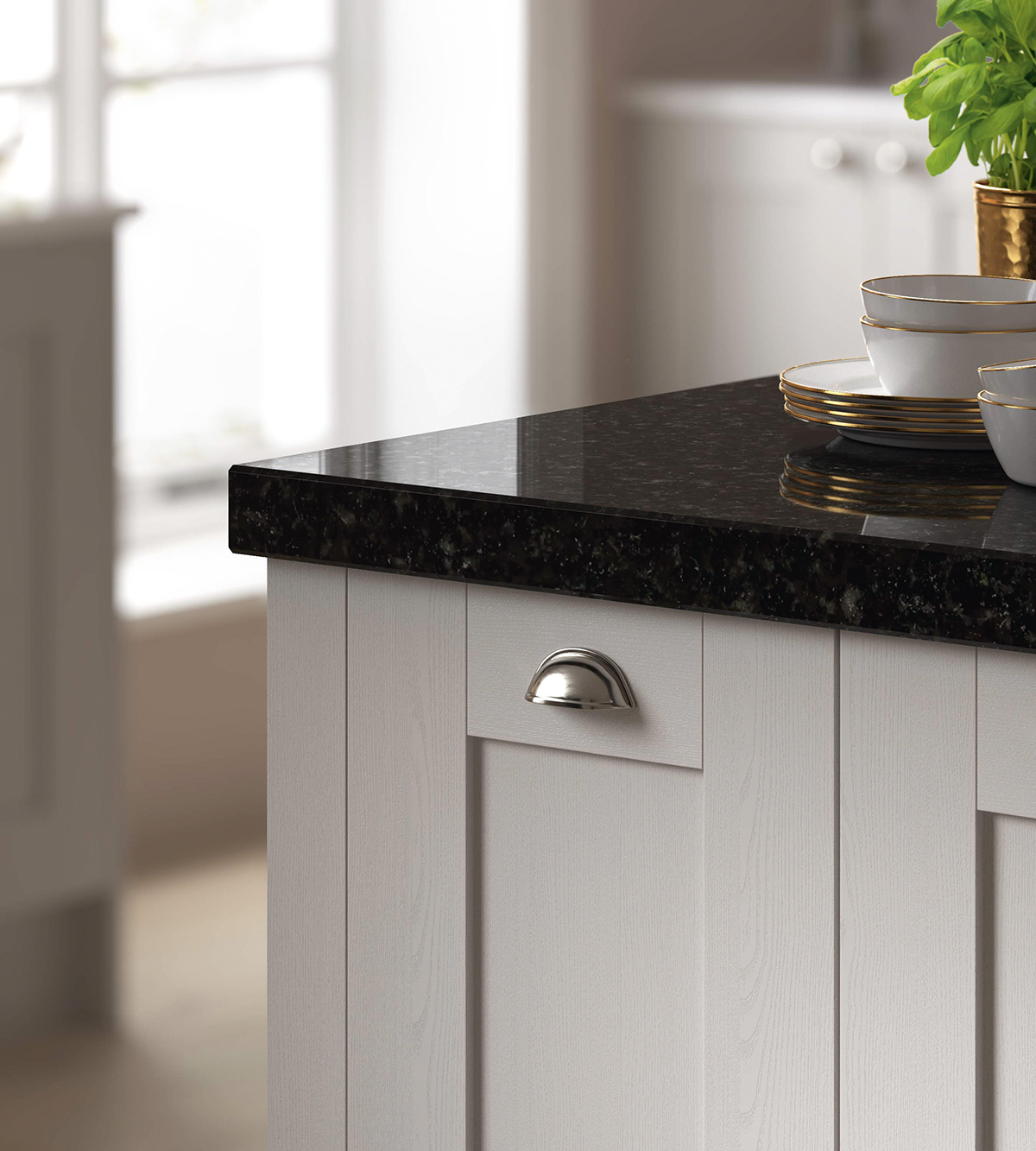
‘A durable and hygienic material, granite looks great in any home,’ says Alex. ‘While it does require regular cleaning and sealing, it is both heat-resistant and hardwearing. However, bear in mind that it’s heat-resistant, not heatproof, so sudden temperature changes can cause cracks or discolouration over time.’ It’s also worth noting that granite worktops are very heavy, making them a costly option to install.
‘You can expect to pay a minimum of £435 per square metre, including supply and installation, so they may not be ideal if you’re working to a tight budget,’ adds Alex.
4. Solid wood
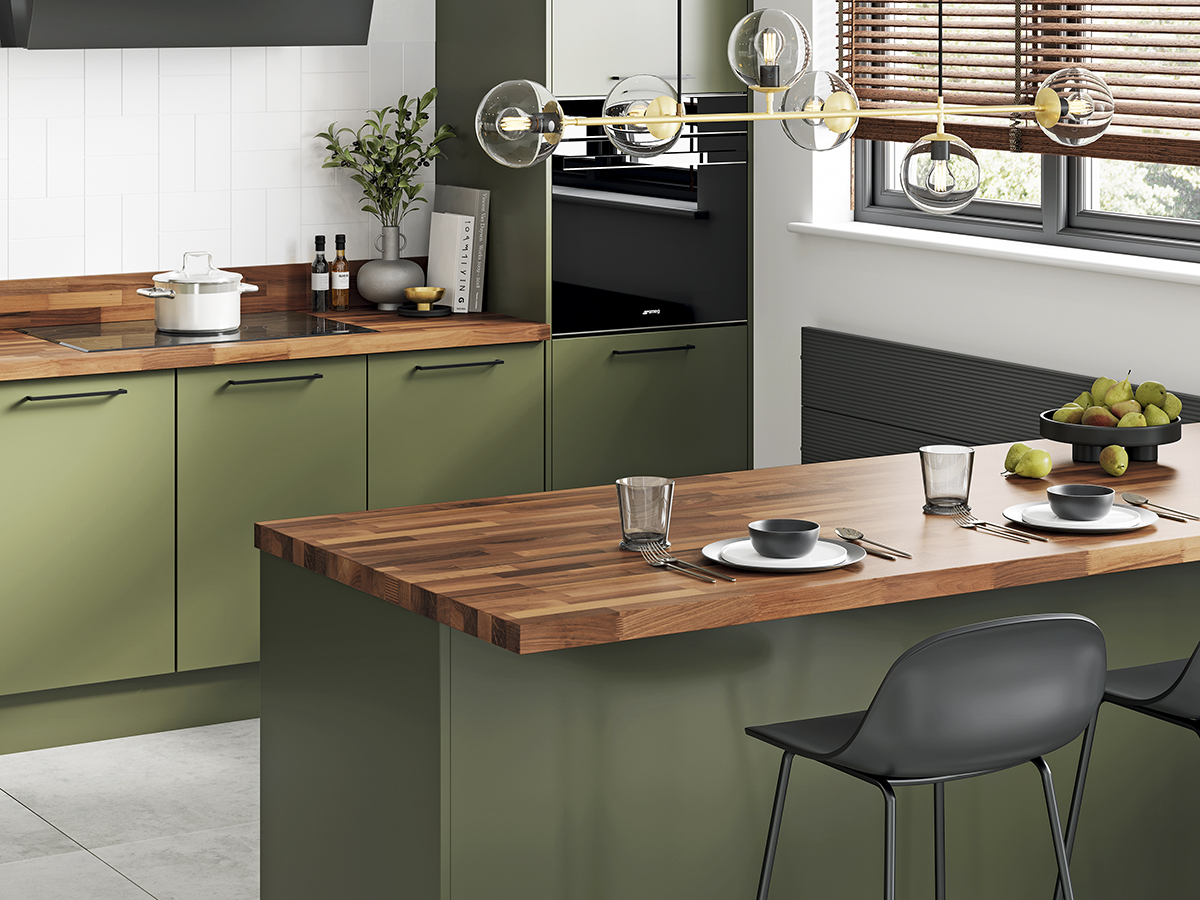
Sustainably sourced wooden worktops can last for years, or even decades, providing they are looked after carefully. There are many different wood species available, all of which showcase natural grain patterns to give your kitchen a unique look that’s full of character.
‘Walnut worktops, for example, are a premium choice for kitchen surfaces due to the wood’s characteristics,’ says Rachel Davies, buyer at Worktop Express. ‘Known for its hardness, durability and stunning visual appeal, walnut offers rich, dark tones, adding warmth and sophistication to the heart of the home. Resistant to dents and scratches compared to some softer woods, walnut worktops can last decades with proper care.’
Most wooden surfaces will need oiling regularly, and spillages should be wiped up as quickly as possible. Always use trivets and chopping boards for protection. Solid-wood worktops are priced from around £120 for a two-metre length.
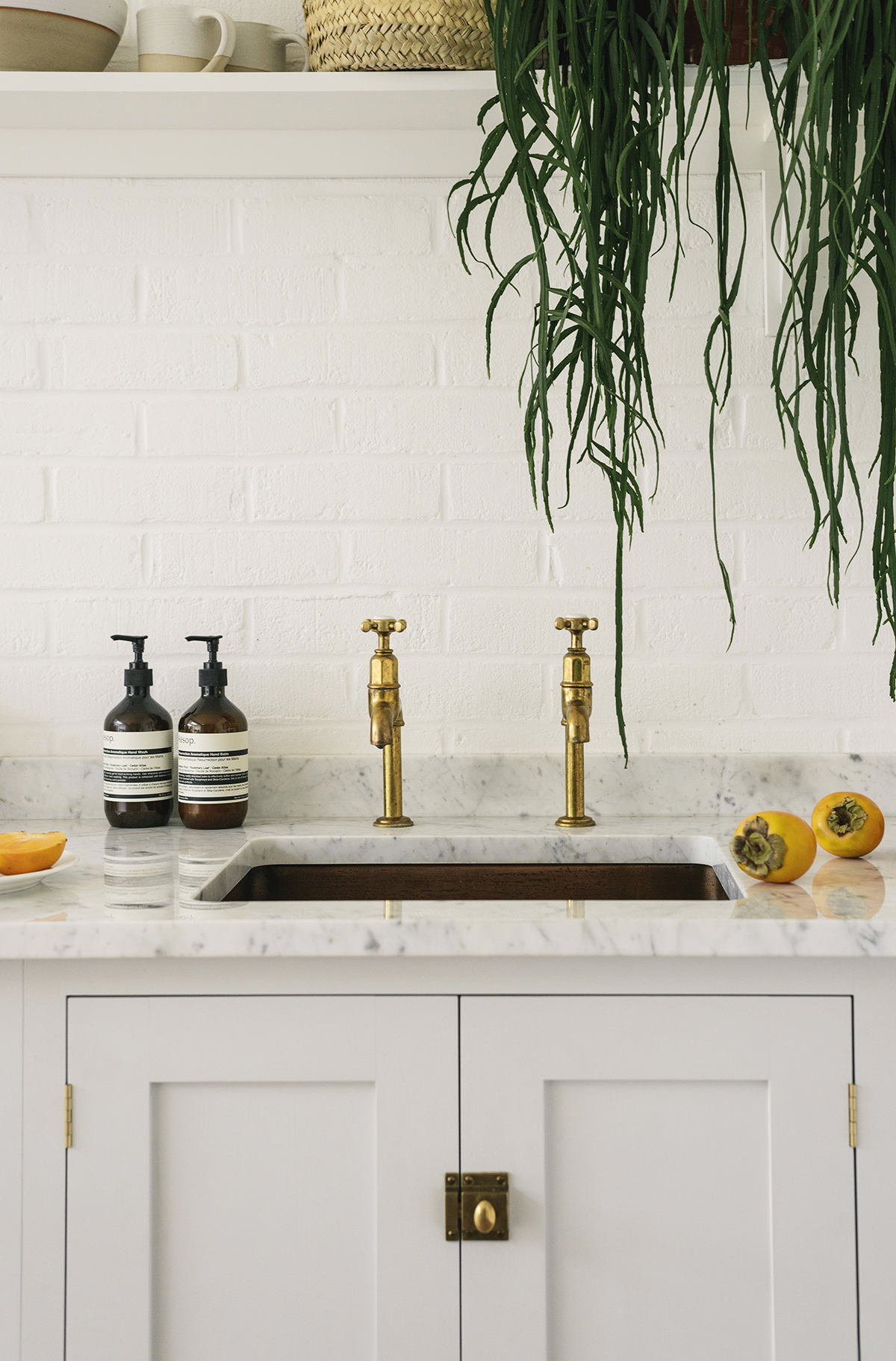
5. Marble
‘Marble is a very popular material due to its luxurious and timeless appearance,’ says Alex. ‘It’s often used in high-end kitchens and classic designs. However, marble is much less durable than granite or quartz, as it is prone to scratches and stains. It requires regular sealing, gentle cleaning, and spills need to be wiped immediately.’
Marble does have heat-resistant qualities, meaning it will stay cool even in warm temperatures (great for making pastry!), but you should never place a hot pan directly onto the surface as it can cause discolouration. Some types of marble, such as Carrara, are less pricey than others.
‘As a rule, you can expect to pay between £1,700 and £2,550 for a five-metre length, including fitting,’ says Alex.
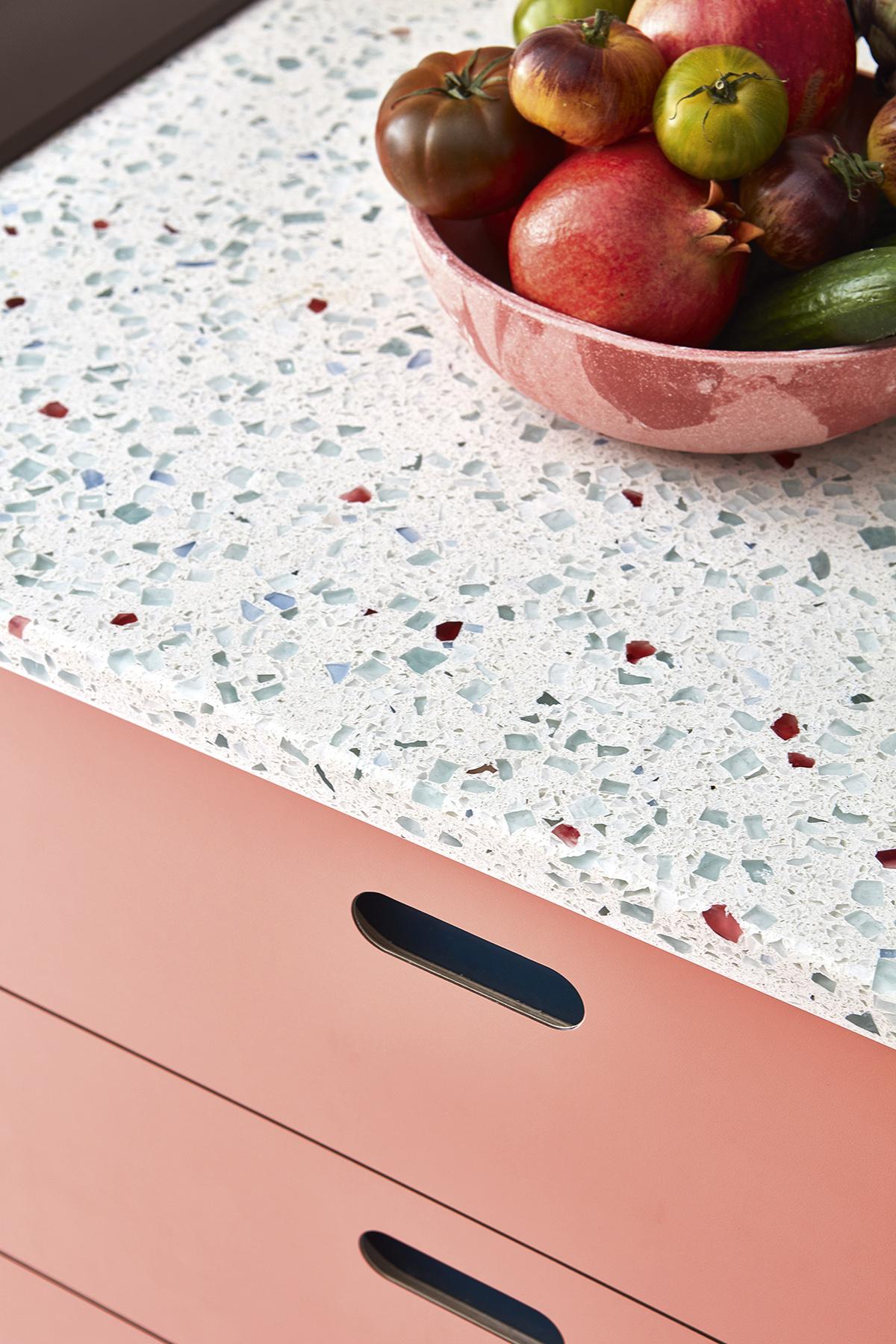
6. Recycled glass
Glass surfaces are often chosen for their light-reflecting properties, which can help to brighten up a kitchen. The non-porous surface is resistant to stains, as well as being heatproof. Recycled-glass worktops are available in a wide range of colours and finishes, whether you’re looking for a colourful terrazzo style or a granite effect, and there’s virtually no maintenance required.
You can pick up a recycled-glass worktop from around £350 per square metre, but expect to pay more for a bespoke, high-end product. RESILICA’s surfaces, for example, are made to order using 85% recycled glass, and contain zero respirable crystalline silica.
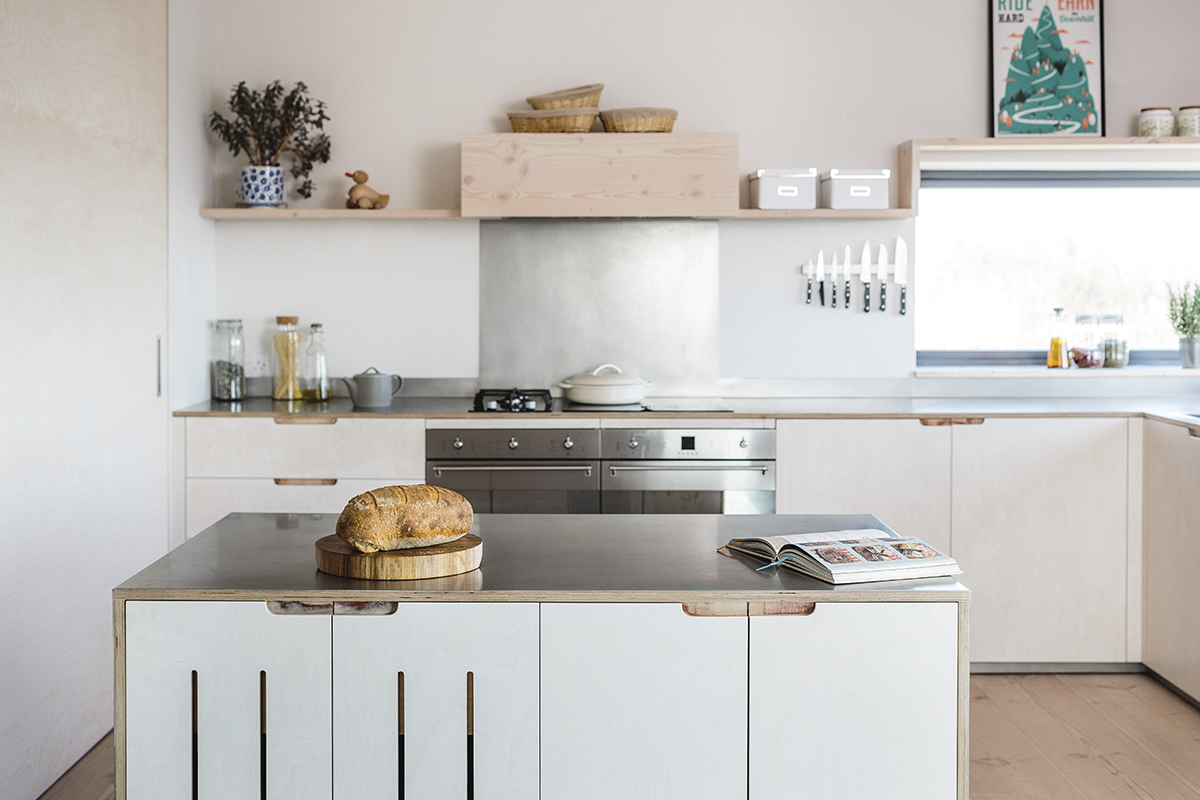
7. Stainless steel
There’s a reason why stainless steel is often used for surfaces in professional kitchens – it’s hygienic, and resistant to heat, stains and water. ‘It’s extremely durable and easy to clean with regular wiping, but can be susceptible to scratches and dents over time,’ says Alex.
If you’re looking to create a modern or industrial look, stainless steel is a good choice, with costs starting from around £200 per metre, plus installation.
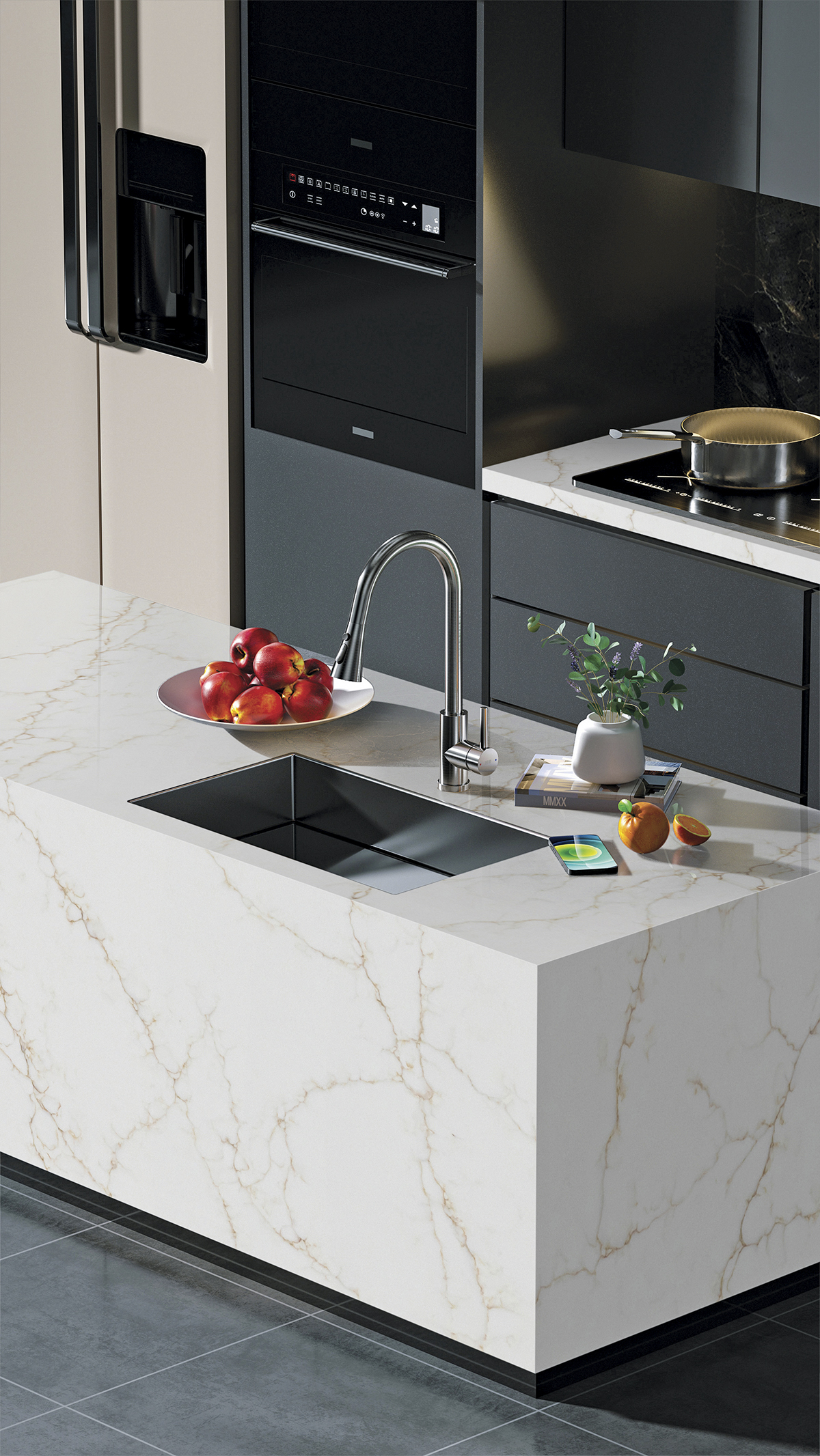
8. Quartz and alternatives
Made from engineered stone, quartz worktops generally contain up to 93% quartz particles that are mixed with other materials, then formed into a slab. They offer many colour and style options, and are non-porous and scratch-, stain- and heat-resistant.
Recent reports have highlighted that the silica particles contained in dust created during the cutting, breaking and grinding of quartz surfaces (and some other engineered stone) can pose health risks to workers/fitters, so you should always choose a responsibly manufactured or low-silica option.
There are plenty of silica-free lookalikes too, which offer similar qualities without any risk to workers. CRL Stone’s Silica Free surfaces, for example, are created by seamlessly replacing the quartz content with glass, while still providing the same scratch-, heat- and stain-resistant qualities of quartz.
Quartz worktops – are they toxic?
Professor Kevin Bampton is chief executive officer of The British Occupational Hygiene Society, a science-led charitable body that works to protect everyone’s right to a healthy working environment.
‘Stone worktops provide hard, heatproof surfaces often because of a high silica content. Stone, such as natural quartz, has been used for worktops because of very high silica levels, but it is expensive and not consistent in strength. For decades we have been manufacturing worktops made up of powdered silica that is then reconstituted. This makes a hard, consistent material that can be coloured, patterned and made into different shapes. The product is entirely safe for worktop users, but can create lethal risks for workers.
The risk to health for workers arises whenever a high silica material is cut, ground or polished, as it releases dust. This dust can contain small particles of silica, some of which are small enough to be inhaled and reach deep into the lungs. The jagged shape of the silica particles make it impossible for the lungs to remove the silica, and the consequences are significant loss in lung function and immune system issues.
Quartz or other artificially made stone has been causing international concern, because of hundreds of deaths of young workers who have been working for only a few months or years in the kitchen worktop industry. The deaths and serious illness caused is from accelerated silicosis, which arises when workers inhale silica dust during the manufacturing process. Silicosis cannot be cured. In the UK, in the last two years, we know of over 40 diagnoses of silicosis in workers in this industry, resulting in two deaths – and for young workers with an average age of around 35. One worker in his twenties, who was only exposed for several months, has been referred for a lung transplant. In Australia, hundreds of workers have been affected, resulting in a ban on the use of quartz/artificial stone for worktops. Hundreds have also been diagnosed in the United States.
The global rise in silicosis arises from a growth in the market for artificial stone, and backstreet businesses providing cheap worktops for the kitchens and bathrooms industry. Silica exposure is relatively easy to prevent, despite the illness being incurable, but many cut-price businesses make little or no attempt to protect their workers from inhaling toxic dust. The businesses involved often operate illegally and the workers therefore have little protection.
Most people buying quartz/artificial stone worktops in the UK will be buying from suppliers who are addressing the risks to workers. Members of the Worktop Fabricators Federation – which includes many of the best-known firms in the business – have recently agreed to launch a kite-mark-type scheme so that, from 2026, consumers will be able to tell whether a worktop has been manufactured without putting workers’ lives at risk. The Health and Safety Executive, which regulates the workplace, is also putting a focus on businesses that are causing risk.
Some distributors are looking at lower-silica products, but the dust created can still cause serious health risks if not controlled. Even wood surfaces can create a significant cancer risk for workers through uncontrolled dust. The best way to buy with a clear conscience is to use a reputable supplier – for example, approved members of the Worktop Fabricators Federation Members Archive - Worktop Fabricators Federation. If the price of a work surface seems too good to be true, the likely saving is because the person cutting and finishing the worktop is not getting protection and your saving may be at the cost of their health.’
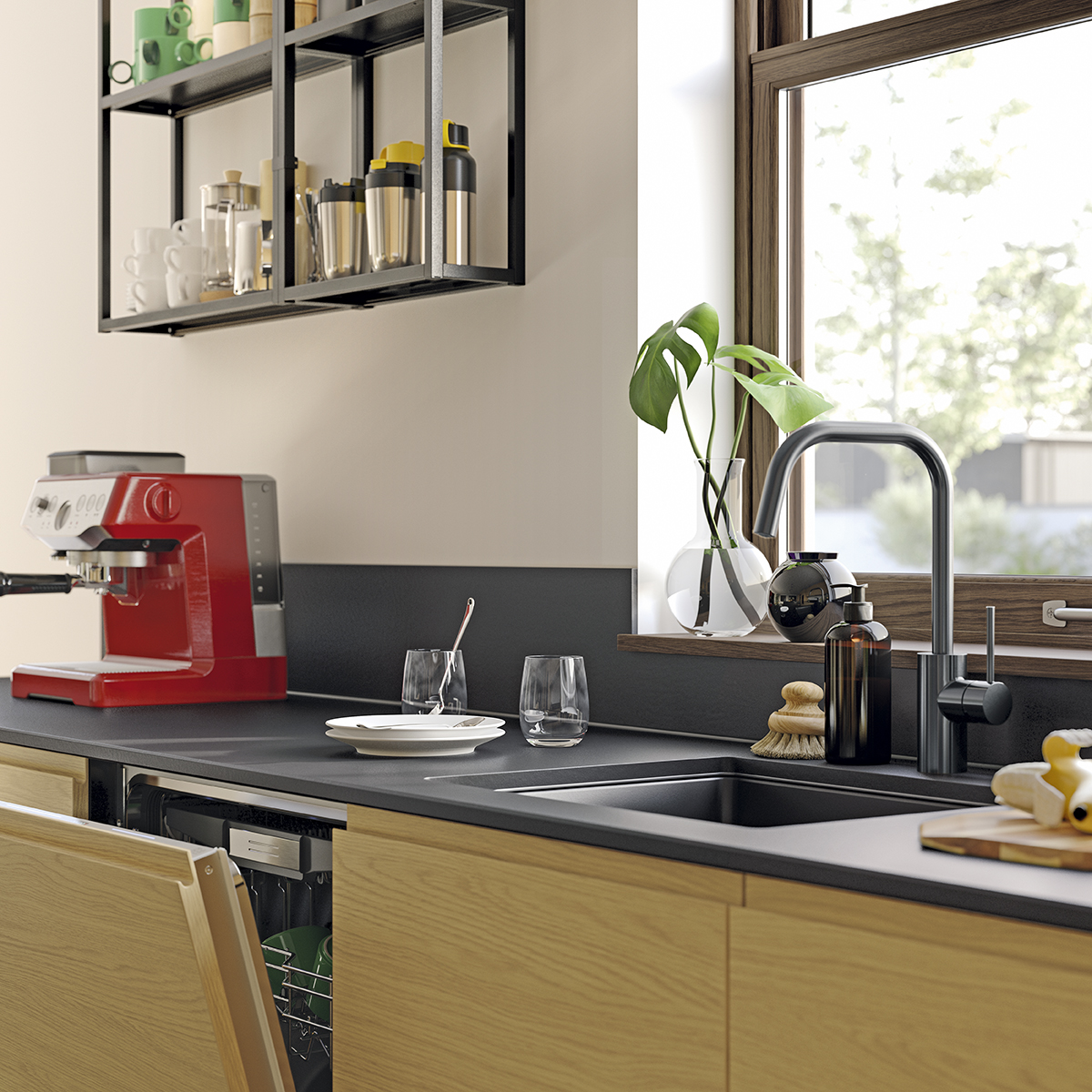
9. Ceramic
Typically made from natural materials including clay and pressed minerals, which are treated at high temperatures, ceramic worktops are versatile and offered in an array of colours to suit any kitchen scheme.
‘It’s popular because of its sleek appearance and its resistance to heat and water damage,’ says Alex. ‘It’s also easy to clean and keep hygienic, and is incredibly durable against daily use. However, it is one of the more expensive options.’
You can expect to pay upwards of £400 per square metre for a ceramic worktop, depending on brand and design.
Which worktop material is right for my kitchen?
Cost constraints
Budget is often the biggest consideration in any kitchen project. If you’re fortunate enough to have a large kitchen, you might need to choose a lower-cost material to keep within your budget. If you only need a few square metres of worktop, you may be in a position to splash out on a more premium option.
Lifestyle choices
If you have a busy family kitchen, the surface you choose will need to withstand daily spills and scratches, so you should prioritise durable materials that will last, such as low-silica quartz or granite. If you don’t spend a lot of time in the kitchen, a solid wood or high-quality laminate may be a more sensible option.
Maintenance requirements
Consider how much time you are prepared to spend looking after your kitchen worktop. Some require very little TLC, whereas others, such as wood, may need regular oiling or sealing to keep them looking their best.
Durability and longevity
If you’re looking for a quick fix to update your current kitchen, a budget-friendly laminate may do the job. If you’re designing a kitchen for your forever home, you’ll want to consider a more long-term option that will stand the test of time.
Meet the experts

Alex Peters is a cost guide expert at Checkatrade, and has experience in the pros and cons of all sorts of kitchen fixtures and fittings.

Emma-Louise Braham, product manager at Bushboard, has over a decade of experience in kitchen product design and project management.

Rachel Davies, buyer at Worktop Express, is an expert in sourcing and procuring beautiful materials and designs to suit all kitchen styles.
Read more:
