
The laundry mistake that could be leaving your home damp, cold and costing you more to heat
When the washing is piling up and the weather rules out the line, draping clothes over a radiator can feel like an easy solution. The heating is already on, so why not put it to work drying your laundry, too?
But with energy bills still on the rise and many of us looking for ways to save money, this everyday laundry habit could be costing you tens of pounds every year. And while it saves manoeuvring around clothes airers, it can actually stop your home from heating effectively and adds extra moisture to the air.
- Don't waste money heating your home this autumn – here's how to cut your energy bills
- The affordable gadget that could save you £300 this winter (and it's really cosy!)
New research from tradesperson platform, MyBuilder.com, reveals that 14 million UK households feel their energy bills are 'completely out of their control'. It found that more than three quarters (76%) of us keep an eye on our electricity use, while 66% of us monitor how much gas we use for heating and cooking.
According to the Energy Saving Trust, households could save up to £55 a year by drying clothes on racks rather than radiators. The exact amount will depend on your home, heating system and how often you dry washing indoors, but changing this everyday habit could help keep energy costs down.
So, if you're trying to keep costs down this winter, it's worth rethinking how you dry your laundry.
Why you shouldn't dry clothes on radiators
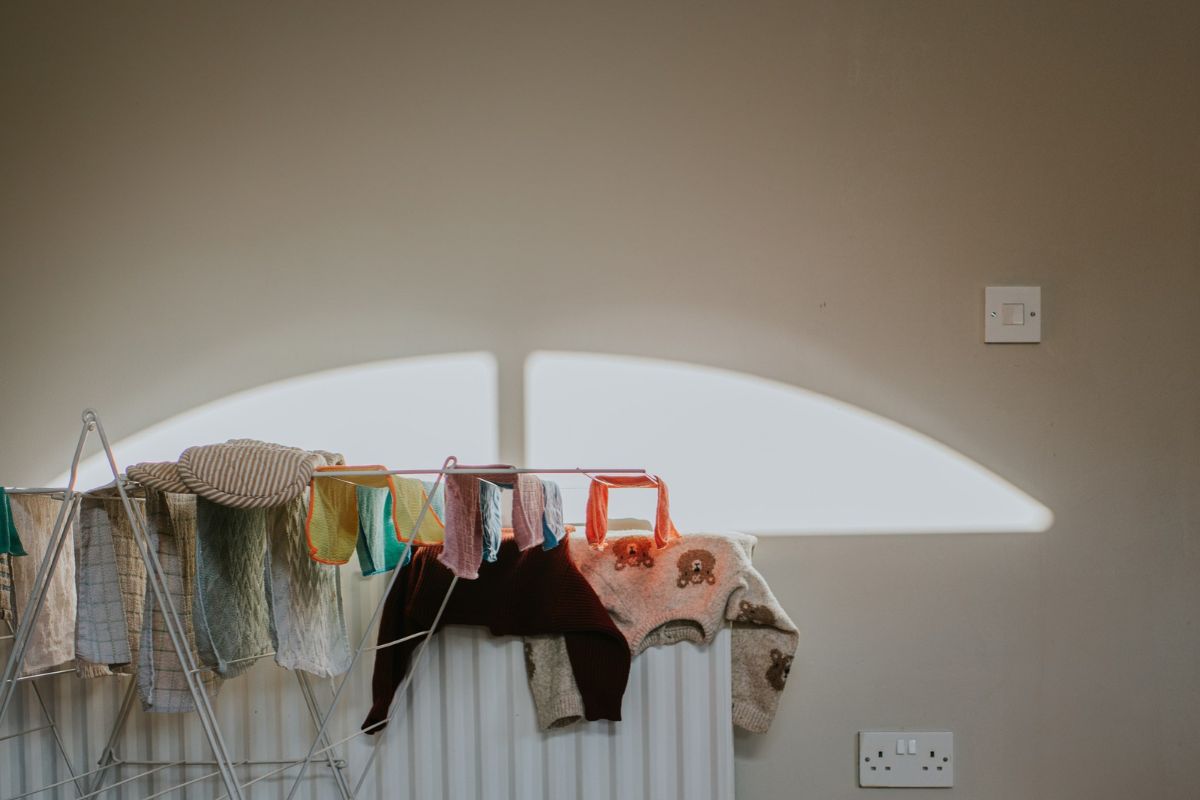
When you hang a load of wet washing on radiators, you prevent warm air from circulating around the room. Heat can't spread effectively and this leaves the house feeling colder, forcing your heating to work harder to keep each room at a comfortable temperature.
Drying washing indoors also releases moisture into the air, with a single load, according to research from the University of Manchester, capable of adding more than two litres of water to your home.
Professor David Denning, of the University of Manchester, explains: 'It’s estimated that as many as 87 per cent of us dry our clothes indoors in the winter. One load of wet washing contains almost two litres of water, which is released into the room..
'Most of us are either immune to the fungus which grows in these humid conditions, or have a sufficiently healthy system to fight the infection. But, in asthma sufferers it can produce coughing and wheeziness, and in people with weak or damaged immune systems, it can cause serious lung and sinus infections,' he says.
MyBuilder's research also found that 15% of people have noticed more mould in their properties this year.
Andy Simms from MyBuilder.com says: 'Drying clothes on a radiator isn't just about the potential fire hazard or the fact that it's less effective at drying clothes. The bigger issues are its contribution to mould and dampness within your home, as well as the inability to heat your home, so you're left with a damp, cold house throughout winter.'
How to dry clothes indoors without causing damp

Fortunately, you don't have to rely on your radiators to get your washing dry! A few simple changes can help you tackle laundry without filling your home with extra moisture:
- Use a clothes airer: Set up a drying rack in a well-ventilated room, rather than draping clothes over radiators. Give each item enough space for air to circulate and help it dry – you could even try a heated airer, if you have space near a plug.
- Try a dehumidifier: These appliances draw excess moisture from the air, helping to keep humidity levels under control while your clothes dry. MyBuilder suggests running costs of around 14p an hour, although the actual cost depends on the model and your energy tariff.
- Make the most of milder days: When the weather is bright, hang your washing outside. Even in winter, a dry, breezy day can help get clothes and bedding dry – and nothing beats that outdoor fragrance.
- Ventilate your home: Open windows when you can to let moist air escape, especially when drying laundry indoors. Professor Denning recommends drying clothes outside where possible, or using a well-ventilated space away from bedrooms and living areas. Extractor fans in kitchens and bathrooms also help reduce excess humidity.
Andy also recommends 'using a clothes drying rail, taking advantage of brighter days and opening windows to help keep moisture levels down'.
So, before you drape another load of wet washing over the radiator, think about what that extra moisture could do to your home. A change to your laundry routine can help keep condensation at bay and keep your home warm and cosy this winter.
Read more:
- Should you pick underfloor heating or radiators? Here's what the experts say
- This ‘game-changing’ heated airer will slash your electricity bill
- This Nordic aesthetic is the secret to a cosy home this autumn
