
With severe weather events and unexpected power outages on the rise, emergency preparedness isn't just for survivalists anymore – it’s becoming a household necessity for us all. The UK Government’s new ‘Be Ready’ campaign urges every household to keep a supply of three-day emergency essentials on hand.
But if you’re working with limited cupboard space or a small budget, how do you approach this demand for extra provisions? Here’s how to build a practical, budget-friendly emergency kit that fits seamlessly into your home.
What is the UK ‘Be Ready’ campaign?
The UK Government recently launched its ‘Be Ready’ campaign to help households prepare for a range of unexpected emergencies. Following a year marked by severe weather and power outages, ministers argue the UK needs to improve its emergency preparedness, noting that Britain currently lags behind several European neighbours.
Whether it’s extreme storms or cyber-attacks, severe disruption can strike with little warning – and experts suggest these challenges will only become more common in the coming years.
The official guidance recommends keeping at least three days’ worth of supplies at home, including bottled water and non-perishable food. Here is everything you need to know about the prepping guidance, how to build up your stash budget-friendly, and how to store it neatly in your home.
What supplies should you store at home?
Water: 3-day supply per person
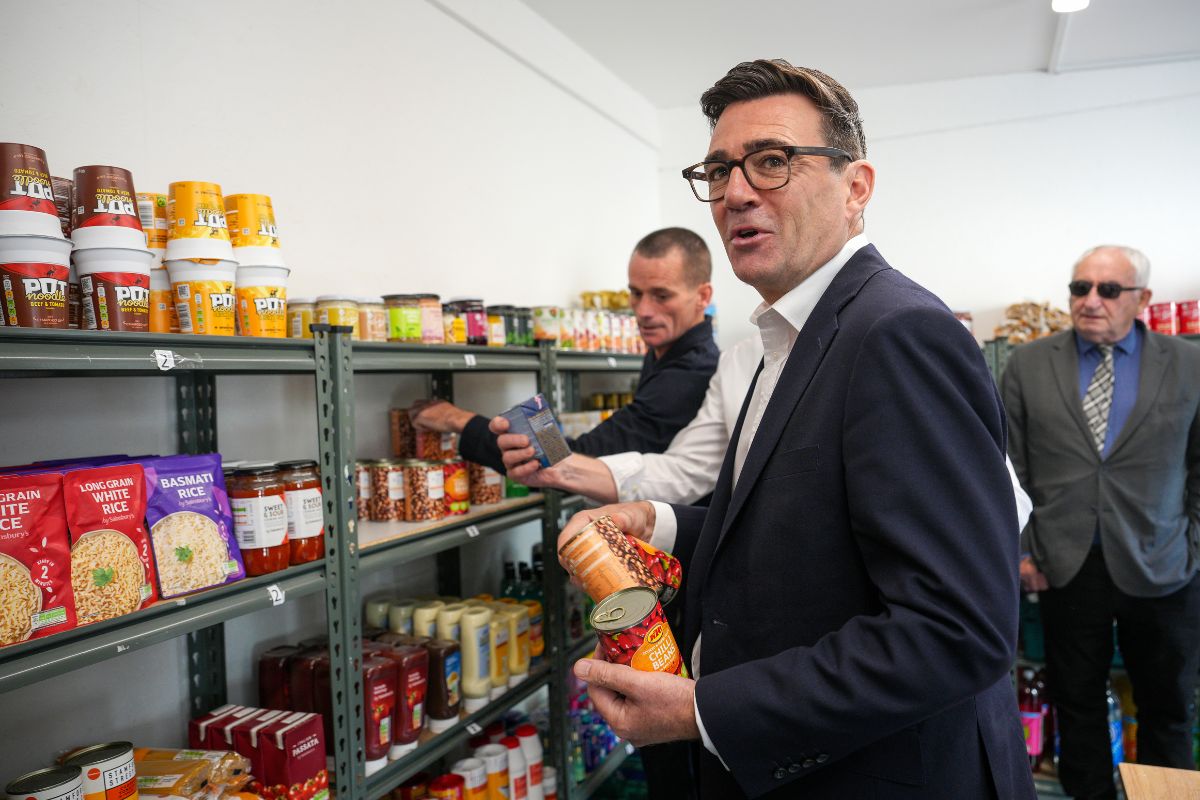
Food: 3-day supply of non-perishable food. During storms or power cuts, you may not have a functioning fridge, microwave or oven. You could invest in a barbeque or portable gas stove to make life a little easier during periods of disruption, so you can cook warm meals and heat water for hot drinks like tea and coffee.
Hygiene: Hand sanitiser, wet wipes, and essential toiletries
Lighting and power: Torch with spare batteries, plus a fully charged power bank. Although most smartphones have a torch function, you’ll want to conserve your battery. Look for rechargeable, camping-style lanterns with a long run time in case the outage lasts longer than anticipated. You’ll also find a good range of stylish battery-powered table lamps, meaning you can also use them as an everyday light. Make sure any lights in your emergency stash are fully charged and ready to go.
Having options for backup power during an outage is a sensible idea, particularly if you rely on certain devices for work, or need to stay in contact with friends and family. A compact, portable power bank costs as little as £20, and depending on the battery capacity (the higher mAh the better), will charge a smartphone to make sure you stay connected. Larger power banks (sometimes called stations) can be useful to charge small appliances and a number of devices at once, but expect to pay upwards of £200 fot those. Always check that your chosen bank is compatible with the devices you’ll need to chrge.
Warmth: Blankets, sleeping bags, and warm layers
Communication: Battery-powered or wind-up FM radio, plus a list of essential emergency contacts. A radio might feel like an unnecessary luxury, but it’s the best way to stay connected with local news and updates in case of an emergency. cHaving a battery-powered radio on standby is a good idea, and one with a hand crank or solar charging option is even better. Look for portable designs with a handle to make them easy to move around, and AM/FM radio to ensure you can stay up-to-date with news.
Money and documents: Cash (a mix of notes and coins) and waterproof copies of key ID (passports, birth certificates, insurance details)
Medical: First aid kit and essential prescription medications
For babies: Ready-to-feed baby formula (avoid powder if boiling water isn't an option), nappies, and wipes
For pets: Pet food, extra bottled water, and necessary supplies
How much water do you need for three days?
Each person requires three litres of drinking water per day, which equals nine litres in total per person for a three-day period. Keep in mind that this figure covers drinking water only – you will need additional water stored for basic cooking and washing.
Which foods are best for an emergency kit?
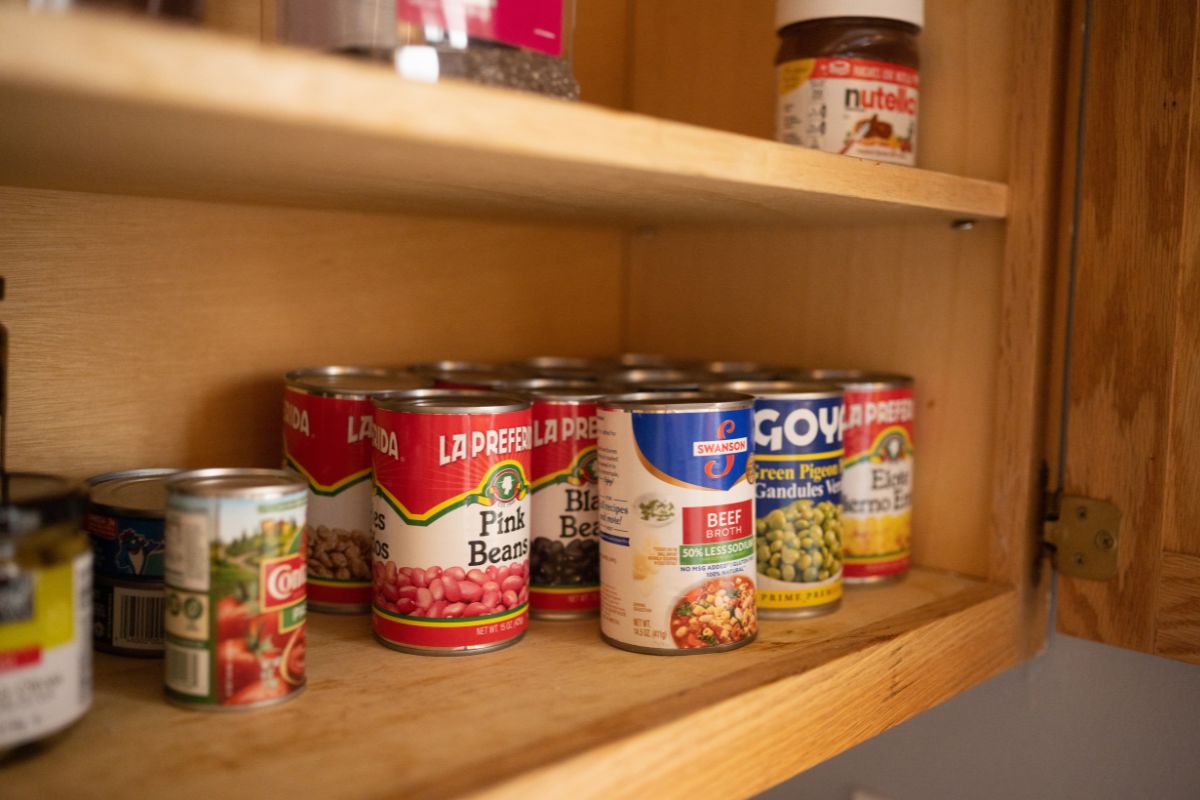
Focus on items with a long shelf life that require no refrigeration or cooking. During severe storms, power outages are common, leaving fridges, microwaves and electric ovens out of action.
Best food items for stockpiling and prepping
- Tinned meats, fish, vegetables, and fruit
- Dried fruits, nuts, and high-energy snacks
Don’t forget to add a can opener to your supplies – otherwise your tinned goods may be entirely out of reach!
Prepping tips
- Choose what you like: Only buy items your family already eats so food isn't wasted.
- Prioritise nutrients: Focus on calorie- and nutrient-dense options.
- Alternative cooking: A portable gas stove or barbecue can make life much easier, allowing you to heat meals or boil water for hot drinks.
- Don't forget pets: Ensure you have enough pet food stocked alongside your own.
Should you store emergency food in the freezer?
A freezer full of pre-made meals is a great short-term buffer, but it relies on power. As a result, freezer-made meals are only really suitable for periods of short-term disruption.
If a power cut hits, keep the freezer door closed to trap the cold air.
- Full freezer: Keeps food safe for up to 48 hours if unopened. The higher thermal mass of frozen food retains cold far longer than air.
- Half-full freezer: Keeps food safe for up to 24 hours.
Avoid overfilling your freezer past 75-85% capacity, as blocked air vents reduce efficiency. If your freezer is mostly empty, fill empty gaps with sealed bags of water to build thermal mass.
If your freezer has thawed, don’t take the risk of food poisoning.
How do other countries prepare for emergencies?
The UK isn't alone in pushing for household readiness. France advises citizens to store 72 hours (3 days) of emergency supplies, while Germany recommends keeping enough food and water to last 10 days.
How to build your emergency stockpile (without spending a fortune)
You don't need to panic-buy hundreds of tins at once. Build your supply sensibly with these steps:
- Audit your cupboards first: You likely already own many of the essentials. Note down any extras you may need.
- Buy gradually: Add one or two extra non-perishables to your weekly shop to spread the cost and avoid straining supermarket supply chains.
- Rotate stock: Set a calendar reminder every six months to check expiry dates. Use up older tins in your regular meals and replace them.
- Connect locally: Chat to your neighbours to see how you can support each other during severe weather, blackouts or other periods of unexpected disruption. If there are any older people or people with illness or mobility issues in your neighbourhood, talk about power outages with them and register them on the utilities priority services register. You should find instructions on how to do this on their household bills.
How to store emergency water
Water containers take up a lot of space, which can be difficult to accommodate in smaller homes. To save space:
- Tuck bottles away: Distribute smaller bottles throughout the house in underutilised nooks, under beds, or in the back of wardrobes.
- Purification options: If space is extremely limited, consider investing in a compact water purifier or purification tablets.
Smart storage hacks for emergency food and gear
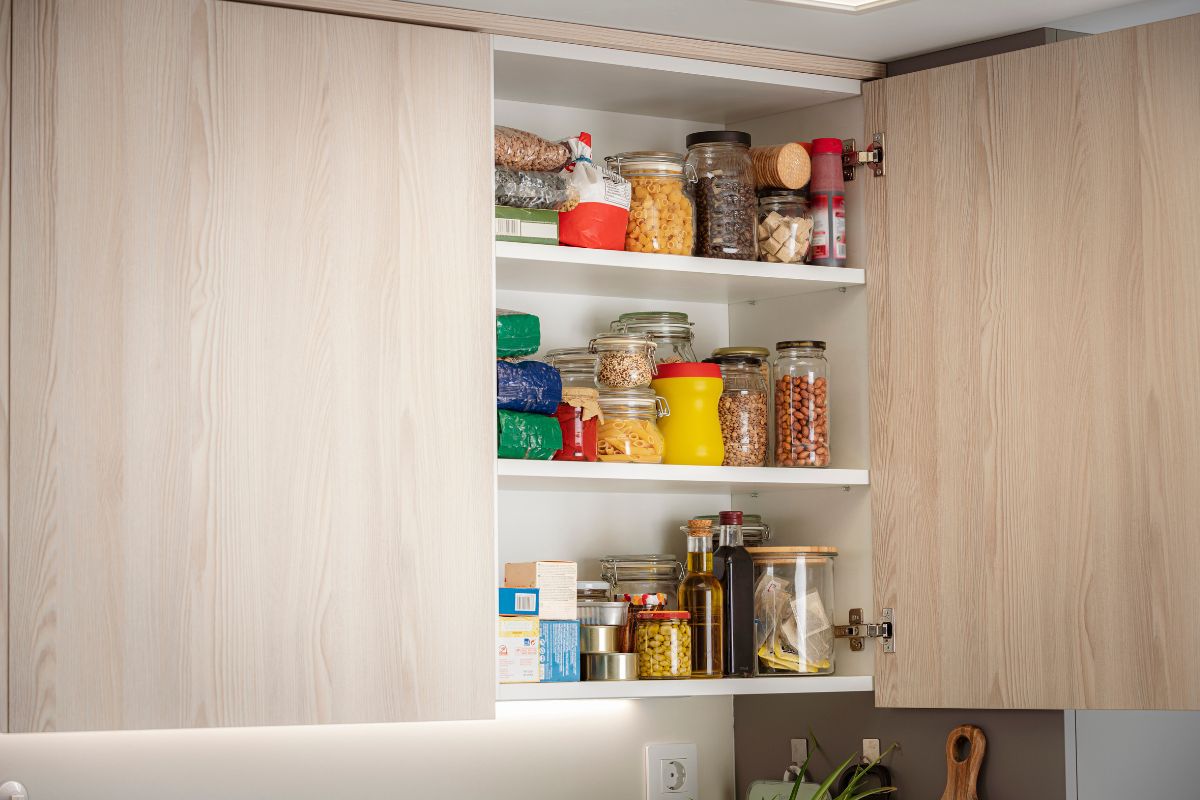
- Integrate with regular storage: Rather than dedicating an entire cupboard to emergency rations, you can simply incorporate your prepping into your existing storage. Store emergency tins alongside daily groceries using a FIFO (First In, First Out) system so nothing gets forgotten or expires.
- Vertical stacking: Use canned goods' stackable design to fill narrow vertical gaps on cupboard shelves.
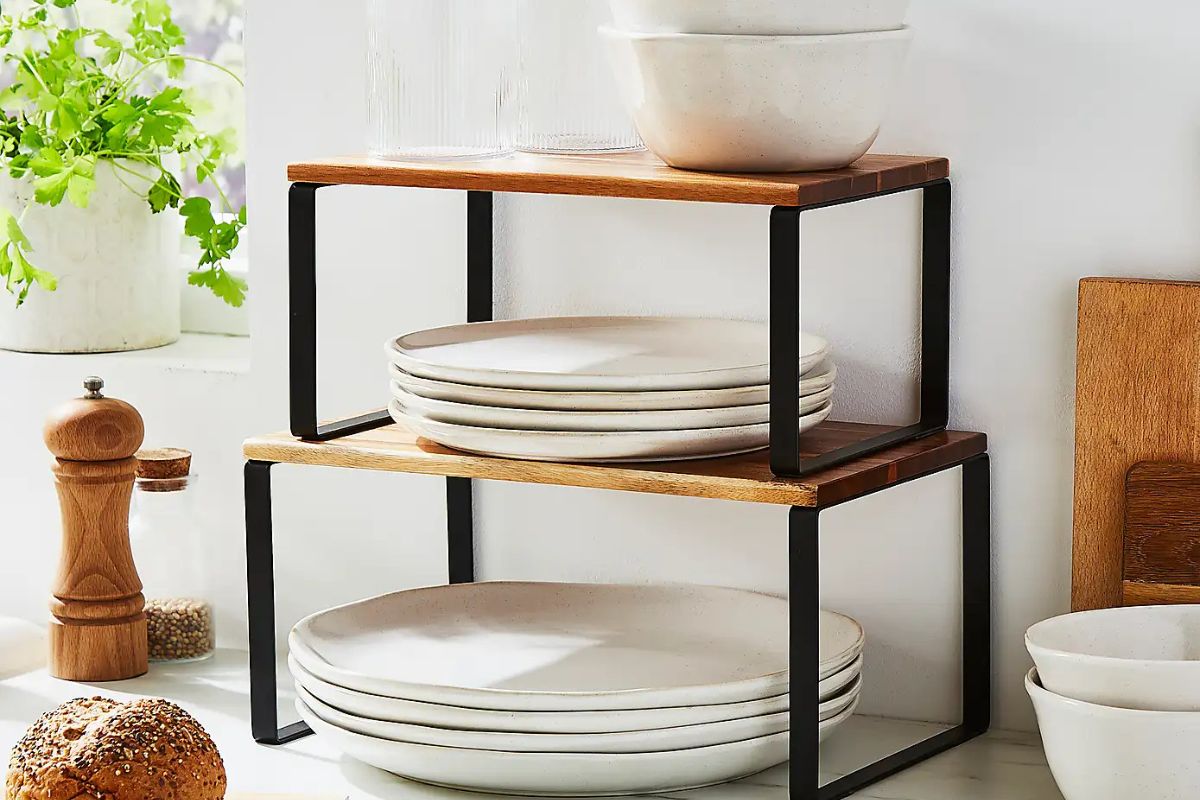
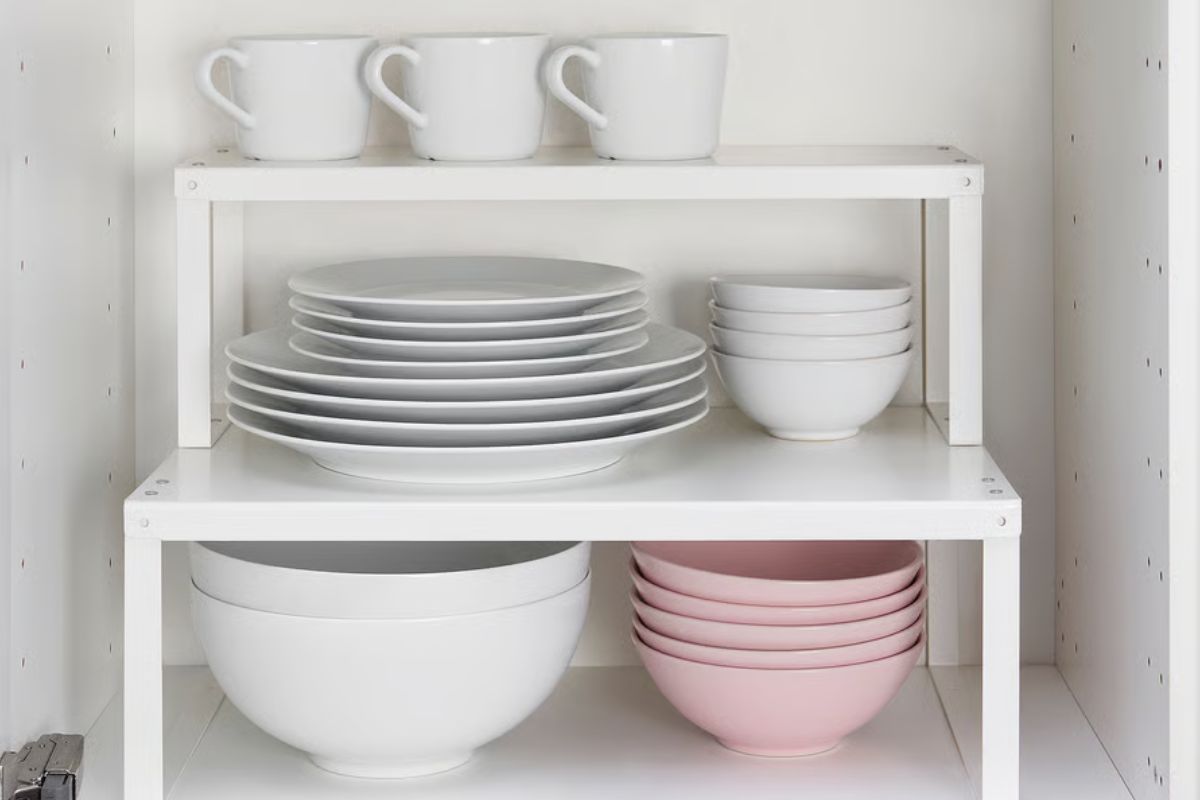
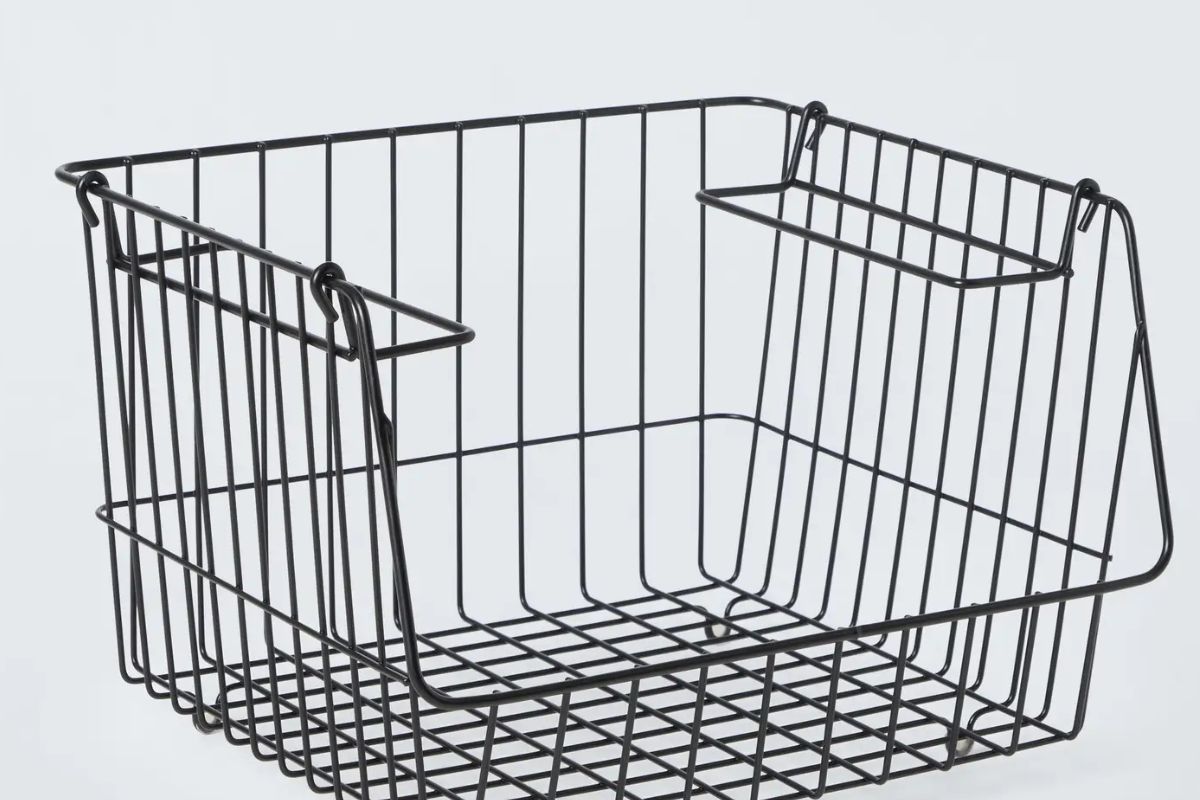
- Maximise cupboard height: Add shelf risers or wire basket inserts to double usable shelf space.
- Use dead zones: Look for any unused areas of your home and invest in some additional storage. Where possible, you could add simple shelves within wardrobes or add over-door organisers for emergency items. Under-bed storage boxes can be a great place to keep spare blankets and other items you may need in an emergency. Vacuum storage bags are worth keeping for bulkier items.
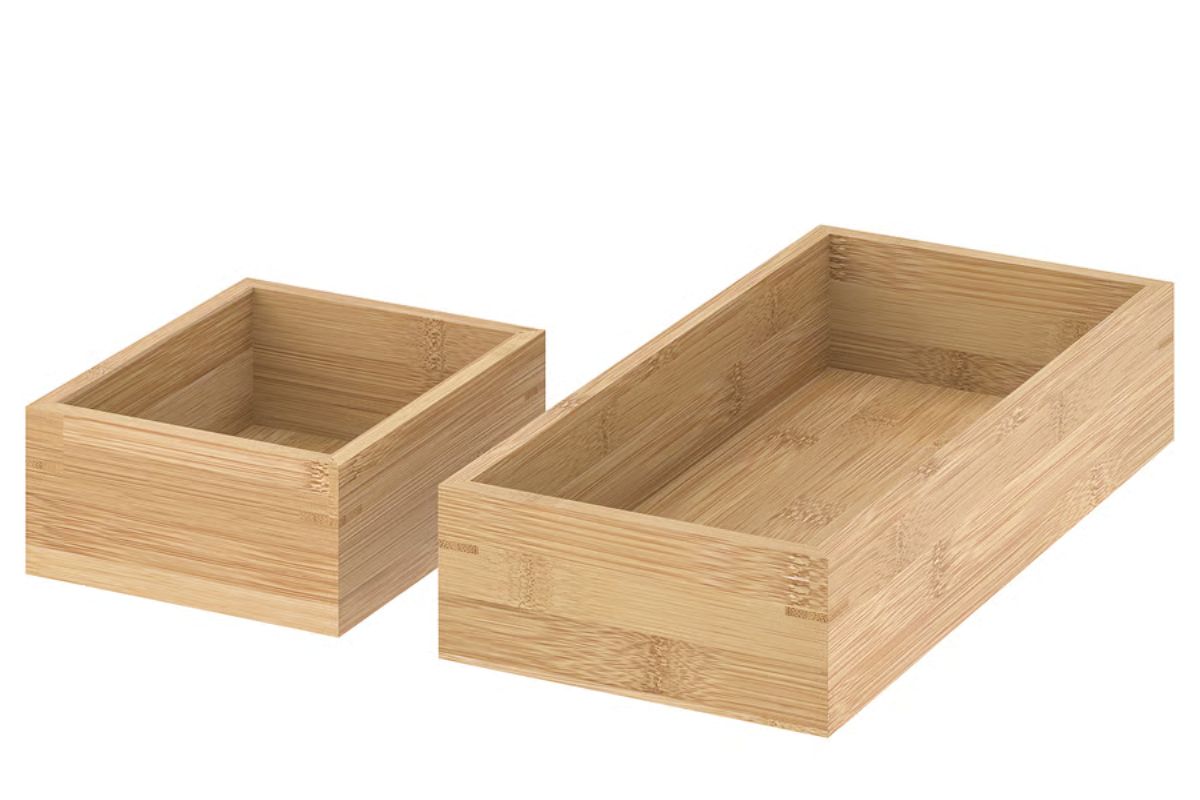
- Dedicated emergency drawer: Create a drawer for emergency essentials. This is where you can keep torches, spare batteries, charged power banks and copies of important documents. Use labelled pouches and cord organisers to keep everything together and prevent the drawer from becoming too chaotic. Check this drawer every six months or so to make sure it's fully stocked, and give it an extra once-over whenever severe weather or power outages are expected.
Best shelf risers and stackable organisers
Dunelm two-piece stackable storage rack (£15)
John Lewis stackable wire storage basket (£10)
IKEA stacking tray (£10 for two)
Top image credit: Mint Images/Getty
