
Imagine how amazing it would be to take on a chateau and restore the sweeping staircases, rambling orchards and fairytale turrets to their former glory.
The thought of moving to France and transforming a derelict castle into a majestic home is something that we’ve all dreamed about while watching Channel 4’s Escape to the Chateau or Chateau DIY.
The reality of buying a chateau, uprooting your life and your family to another country and repairing a historic building is rewarding yet challenging.
There are local planning laws to work around, unexpected costs and cultural differences to consider, but it gives you the chance to bring a chateau back to life – often saving it from complete collapse.
Surprisingly, buying a chateau can often cost less than buying a house in the UK, especially if there’s restoration work to be done.
Discover the highs and lows of restoring ancient manors and chateaus in France with three very different buyers.
‘I couldn’t afford to buy in London – so I bought a French mansion'
Natasha, 28, had a well-paid job in London but was struggling to find somewhere she could afford to buy. She grew up in the city and moved in with friends after university, but dreamed of having her own place as rent prices kept going up and up.
She moved in with her parents to save money while she looked for somewhere to buy. However, she quickly realised that it was impossible to buy even a small property on a single income – even though she was earning a good wage.
The amount that she would be able to borrow was extremely limited. Like many young people looking to buy their first home, Natasha had been priced out of the market.
‘I just got a bit defeated,’ she says. ‘I thought: I’m not going to be able to buy in London any time soon.’
Natasha had spent a lot of time in France with her family as a child, so she decided to start looking there. Her parents were getting older and she began to think that it would be lovely to have a place abroad that they could enjoy when they came to visit.
‘That’s where my thought process went, I didn’t really know what I was getting myself into at the time, given that my one requirement was that it was structurally sound. That went out the window the moment I saw Bèze Manor,’ she says. ‘It’s not structurally sound, but it’s pretty! I’ll take it!’
Don't be afraid to bargain
Bèze is an 18th century mansion in the South of France, an ancient building which Natasha says she bought for less than the price of a one-bedroom apartment in London. She and her family visited several properties before settling on Bèze, and when Natasha first viewed the manor it was out of her price range.
But a stroke of luck came in the form of a severe storm. The roof was already in a bad state of repair and the storm damage made it even worse, but it allowed Natasha to negotiate a lower price – and the manor was finally hers.
@monmanoir Tour of this 18th Century Mansion, that we are trying to restore #renovation #renovationproject #firsttimehomebuyer #abandonedhouse #movingabroad #chateau #restoration #southoffrance ♬ original sound - Restoring Bèze Manor
When she moved in, she began to document her renovation journey on her TikTok account, @mon_manoir, which has reached 120k followers.
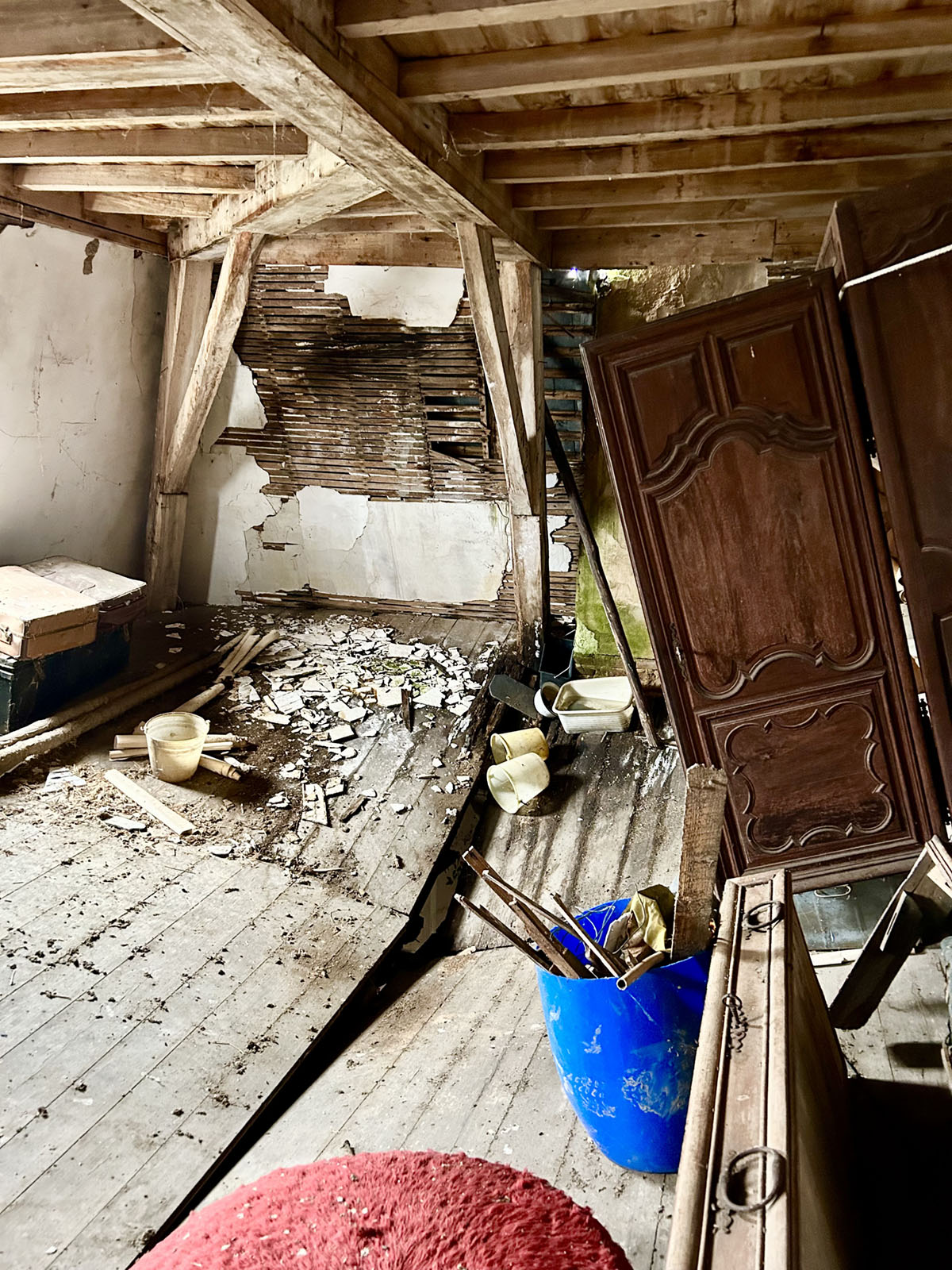
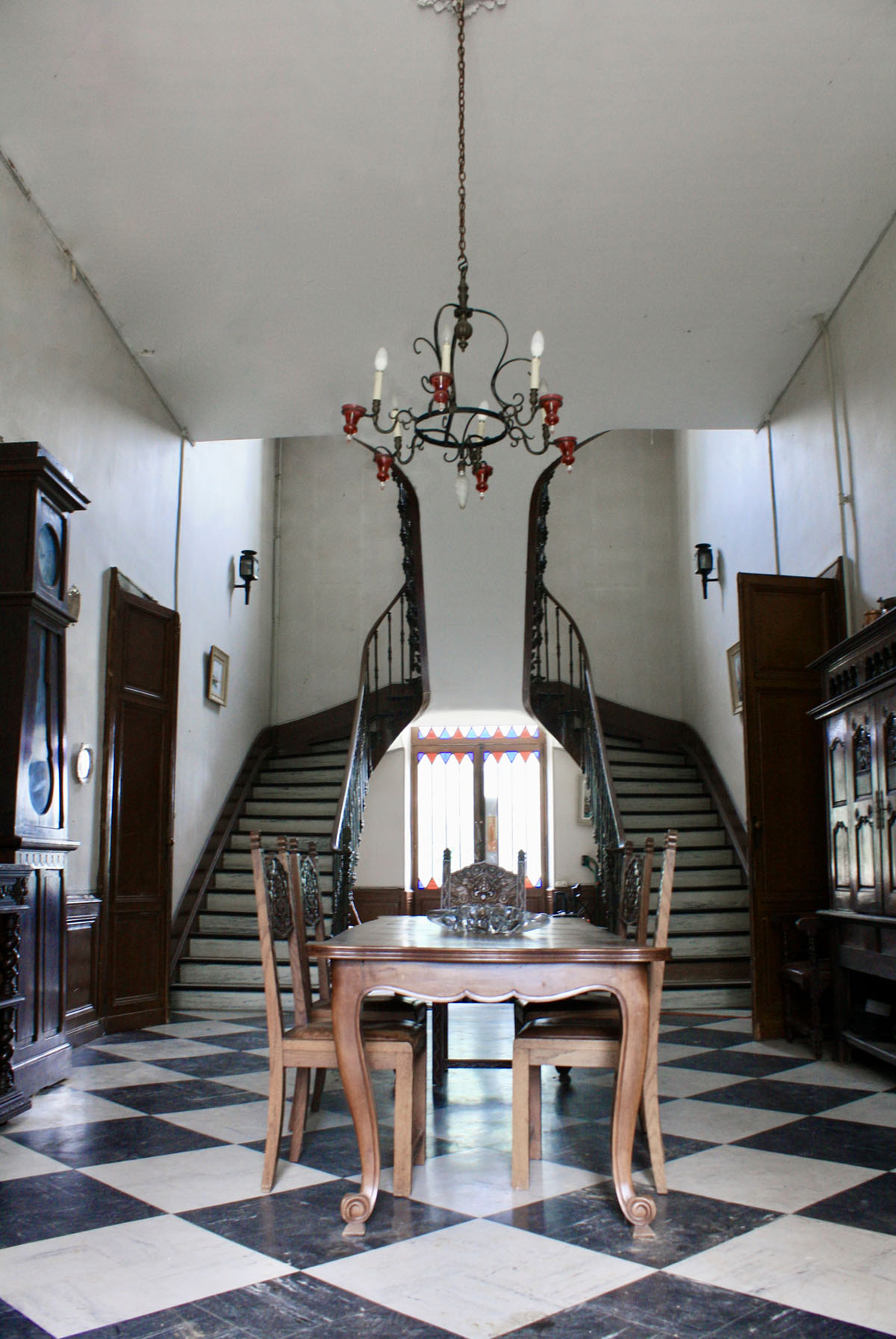
A tour of the manoir reveals a crumbling building filled with glimpses of its former grandeur: there are original fireplaces, elegant staircases and even doorways with beautiful stained glass panels.
In the voiceover, she comments: ‘When I’m not having a breakdown wondering what on earth I was thinking, I am pretty in love with the place.’
Kick-starting the renovation
There are some serious repairs that Natasha will need to take care of, including collapsing ceilings and a room with a severe mould problem, but she sees this as a long-term project. ‘I keep reminding myself that it’s a marathon not a sprint, so I can take my time with it,’ she says.
Her first priority was to fix the roof and get the building watertight. In France, large structural work comes with a 10-year guarantee.
Replacing the whole roof would be astronomically expensive, so Natasha talked to lots of builders until she found one who could repair the roof rather than ripping it out and building a new one. ‘It’s still expensive, but half the cost of replacing the whole thing,’ she says.
The manor doesn’t currently have any central heating, but she accepts that most of the improvements to the property will take time. ‘In the winter, we just hug each other and cry,’ she jokes. ‘And cuddle the cats – that’s good enough for now.’
Another challenge has been maintaining the manor's antique wiring, which Natasha describes as being ‘precariously from the 60s’. She had to track down ceramic fuses in order to repair the electrics, which has been a success as the lights haven’t blown in four months.
The DIY approach
Natasha plans to do a lot of the work herself to save money and even enrolled in a plastering course to get her DIY skills up to scratch. ‘I’m probably the last person people would think would buy a massive renovation project,’ she says.
Although there’s a lot to do, Natasha has a vision of how she’d like the manor to look. One room she plans to turn into a fantastical library, complete with a mezzanine floor. It sounds like a book-lovers paradise.
Fascinating finds
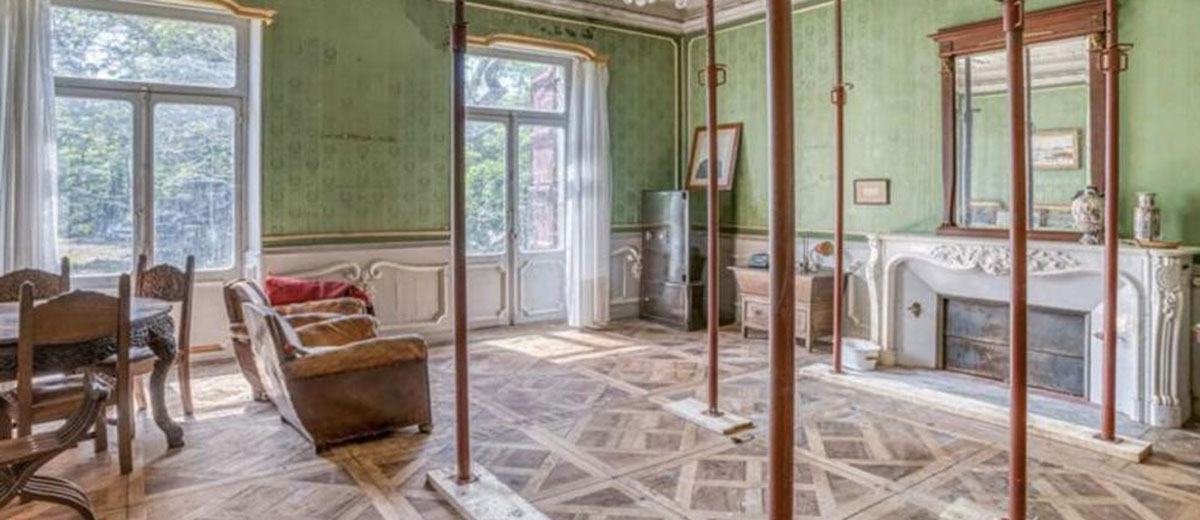
In the meantime, she wants to transform the green room – a space with antique wallpaper that definitely does not contain arsenic.
Her worried TikTok followers asked her to test it and it was fine: ‘I had a million comments saying: watch out, you’re going to die!’
However, the wallpaper did turn out to be something very special. She did some research and thinks that it dates back to the end of the 19th century.
The wallpaper is Napoleonic in style, so Natasha believes that it was a replica of the original wallpaper (which probably did contain arsenic!). She found rolls of it, so she’ll be able to restore the room to its former glory.
Other fascinating finds include ancient bottles of wine in the cellar (which she hopes are still drinkable), an old spinning wheel and old casino games. There were also vintage books which have been nibbled by rats, but she wants to get them restored.
She also found an enormous ancient key that doesn’t fit any of the locks in the manor, which Natasha suspects may have come from the original chateau that was built on the site.
Juggling priorities
Natasha’s freelance job allows her to work remotely – in her previous role she travelled a lot, which made it tricky to find time for the renovation work.
She now has the flexibility to work and restore the manor in her free time, with help from her parents. Her dad is still working, but her mum is fully retired and is enjoying her new life in France.
Her dad helps to keep the garden under control: ‘He loves gardening, which is good because everything is growing. You don’t realise with a hot country how quick everything grows. It’s insane.’
What to know before you buy
Natasha recommends that anyone considering buying their own chateau should do lots of research beforehand.
There’s lots of information available online and she says it’s worth learning about how French mortgages work before you buy. For example, the minimum loan amounts may be more than you need to borrow, so there’s an additional learning curve when you’re buying properties in France.
She says that you should be prepared for the buying process to take a very long time and that it’s likely to take four times longer than you expect: ‘The whole renovation process is really painful and really great at the same time.’
‘I always say check with your estate agent the value ceiling of the property,’ Natasha says. ‘So for me what was really important is making sure that any work that I did, if my circumstances changed and I couldn’t afford it again, I could sell and recoup my losses. But obviously when you've got no roof, you can only really go upwards. Anyone will pay more for a property with a roof.’
Natasha warns that you should bear in mind that living costs are not necessarily cheaper in France. Food is still expensive and you’re likely to pay more for building materials than you would in the UK. ‘If you’re going to buy paint, you’ll pay double the price,’ she says.
When she does visit the UK, she tries to fill the car with things she wants to bring back to save money – as well as things she misses from the UK, like sausages. ‘The French do a lot of good food, but I like a Cumberland sausage,’ she says wistfully.
There are some things in France that make up for it though: ‘I could eat French bread and butter all day.’
Follow Natasha on TikTok @monmanoir to watch as she renovates her historic mansion.
'We wanted to escape our stressful city lives and make a fresh start'
Amanda and Lincoln Miller were living in a small apartment in San Francisco with their two daughters when they decided that something needed to change. ‘Lincoln was working in finance and I was a personal chef,’ Amanda says. ‘I was getting burned out working long hours and Lincoln was too.’
As they were both from the East Coast, they’d always loved historic properties and made the decision to look overseas for their dream home. They were fortunate enough to have dual citizenship, as Amanda had Italian heritage on her father’s side.
Over the years, they’d made several trips to France and always felt at home there, so it felt like the perfect place to relocate to.
After a few trips back and forth, the couple realised that chateaus were surprisingly affordable compared to what they would expect to pay for a property in San Francisco. ‘We wanted a project, so it ticked all our boxes,’ Amanda says.
Finding the perfect property
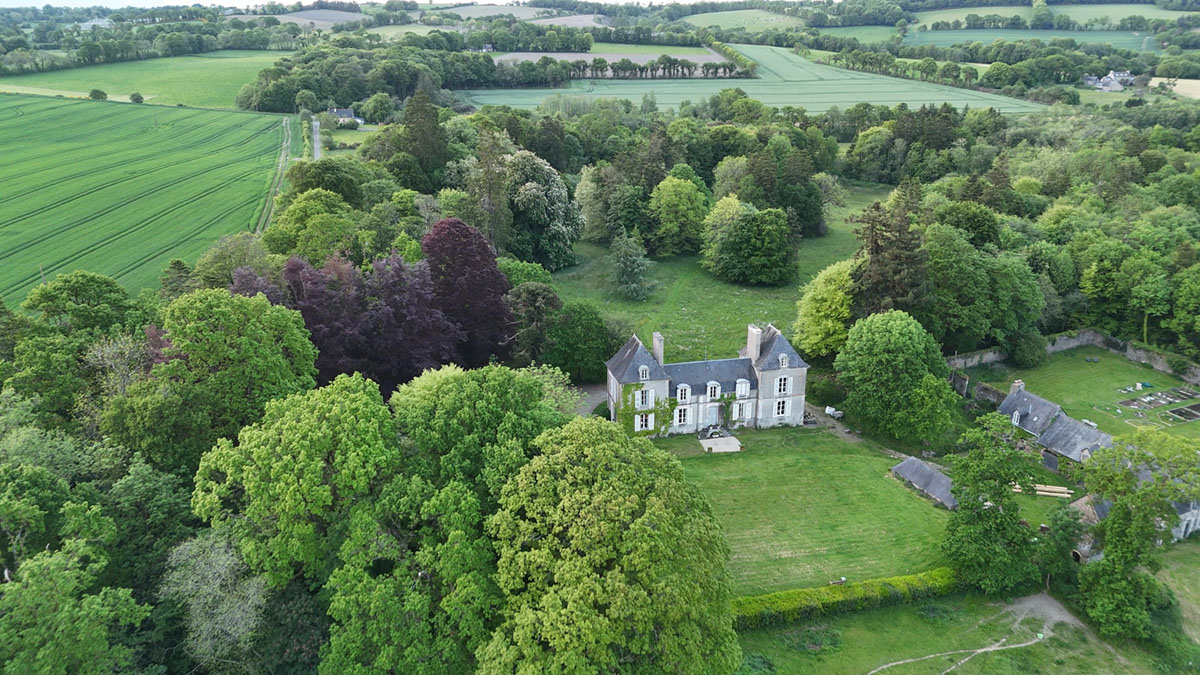
In 2018, they started making trips to visit chateaus and viewed around 20 before finding Chateau Lingourdy, a stunning 19th century castle in Brittany. They looked in the Loire valley at first, but when they visited Brittany they realised that they wanted to live closer to the coast.
Their first chateau sale fell through, but when Amanda saw Chateau Lingourdy she instantly knew that it was where she wanted to live. ‘What sold it to me was the walled garden,’ she says. ‘I fell in love with it.’
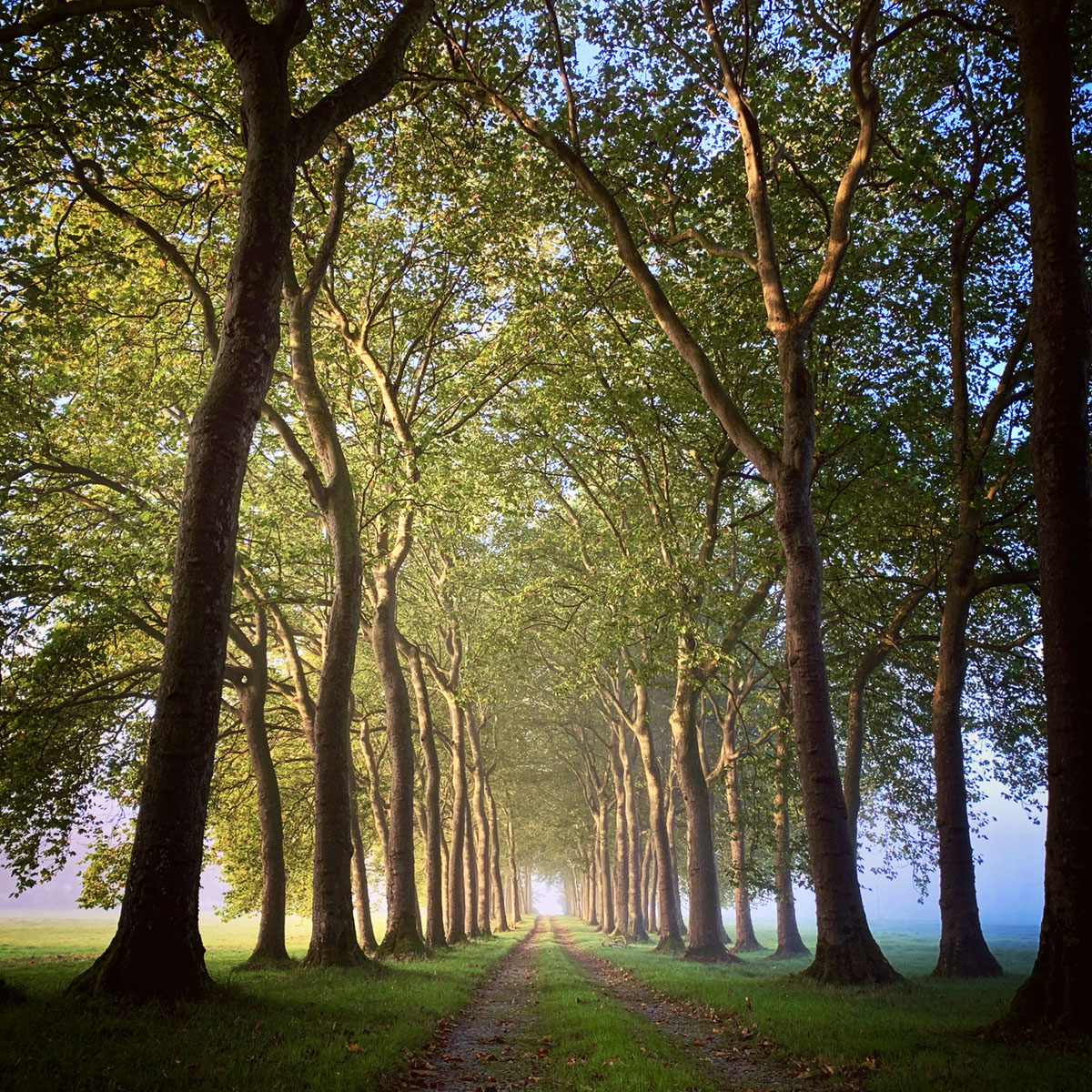
With six bedrooms and 40 acres of land, it was exactly what Amanda and Lincoln had been looking for.
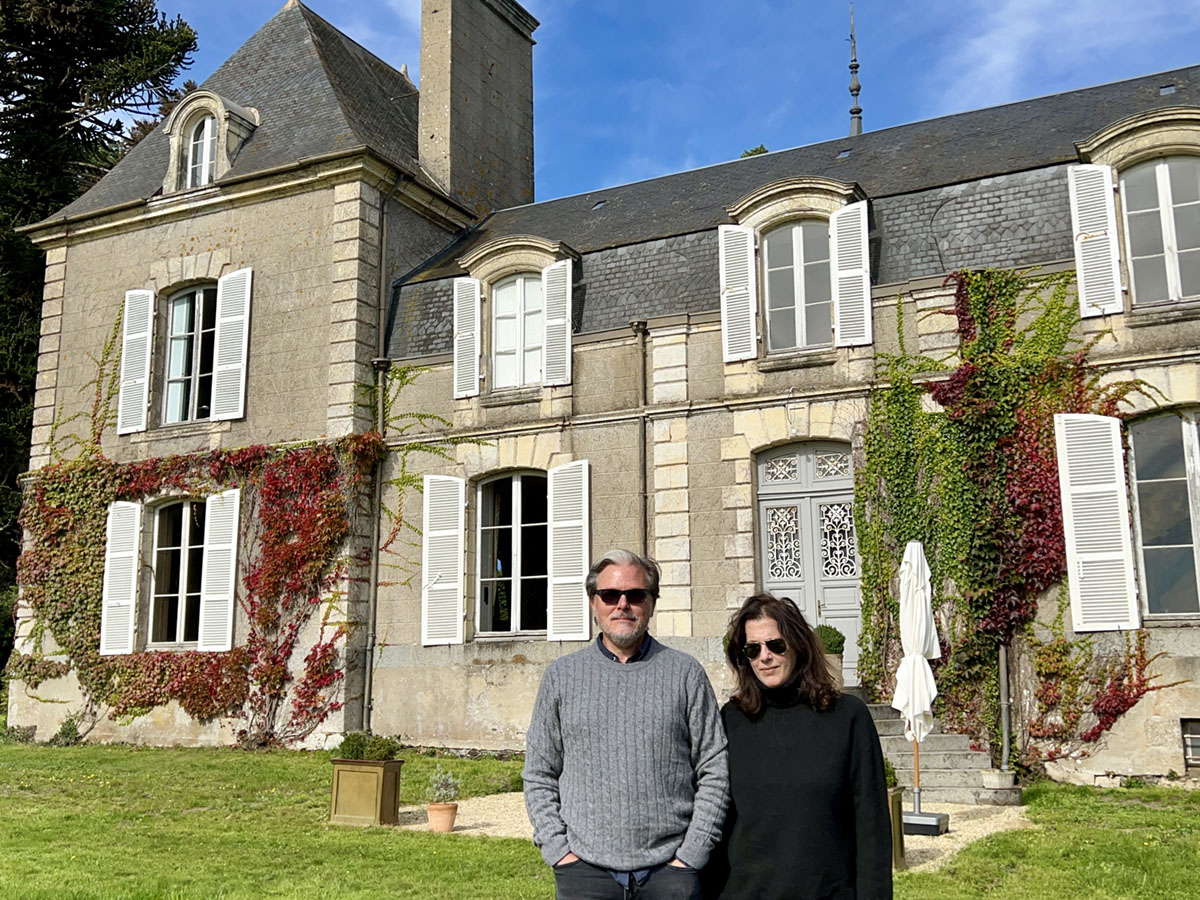
The family finally moved in August 2019, so they only had a few months to settle in before the pandemic hit.
Amanda admits that it was a hard time for the family: ‘The kids were at a French school and that was difficult for them. You know, having to wear masks at school and not really knowing the language too well. That was a hurdle for all of us.’
Getting hold of building supplies was a challenge, but the couple were keen to get to work. Luckily, the chateau didn’t have any serious structural problems, but Amanda says it was sad-looking and tired.
Despite its air of neglect, it still had some fantastic original features including internal and external shutters and period moulding.
‘One thing that we always checked for when looking for a chateau was the roof,’ she says. ‘This roof was in great condition, so we'll never need to put a new roof on. It can cost €200,000 to replace a slate roof!’
Unexpected challenges
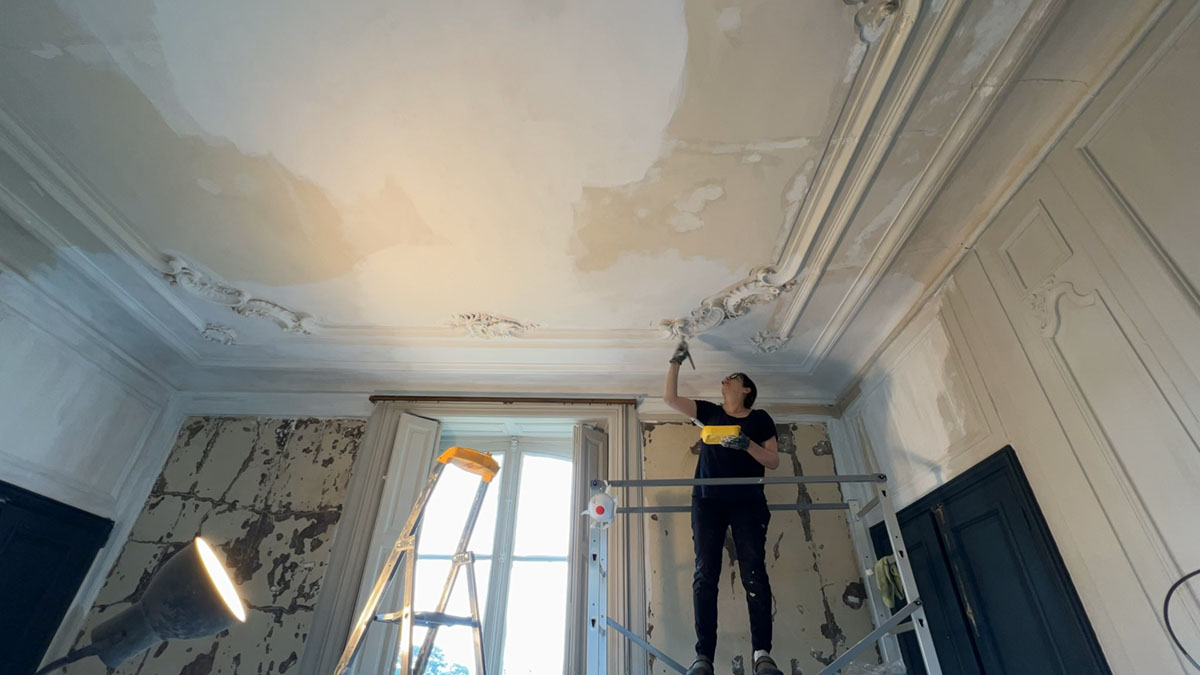
However, there were a few unwelcome surprises when they started the renovation. When they ripped up the bathroom floor, they discovered that all of the beams underneath were rotten, turning what should have been a straightforward reno into a bigger project.
The couple took the setback in their stride. ‘You have to be willing to change plans – at the drop of a hat if needs be,’ Amanda says.
Chateau renovations can be risky too – the first week the family moved into the chateau, they removed the carpets from the grand staircase and Lincoln tripped, breaking his wrist.
It was the family’s first experience of a French hospital. ‘We were shocked when we got the bill – I think it was like €15!’ Amanda says.
Since then, Lincoln has had a few falls, including a fall from a ladder while working on the bathroom but fortunately he made a full recovery. The couple now has a rule that they never go up ladders alone – one of them always stands nearby as a spotter.
Preserving character
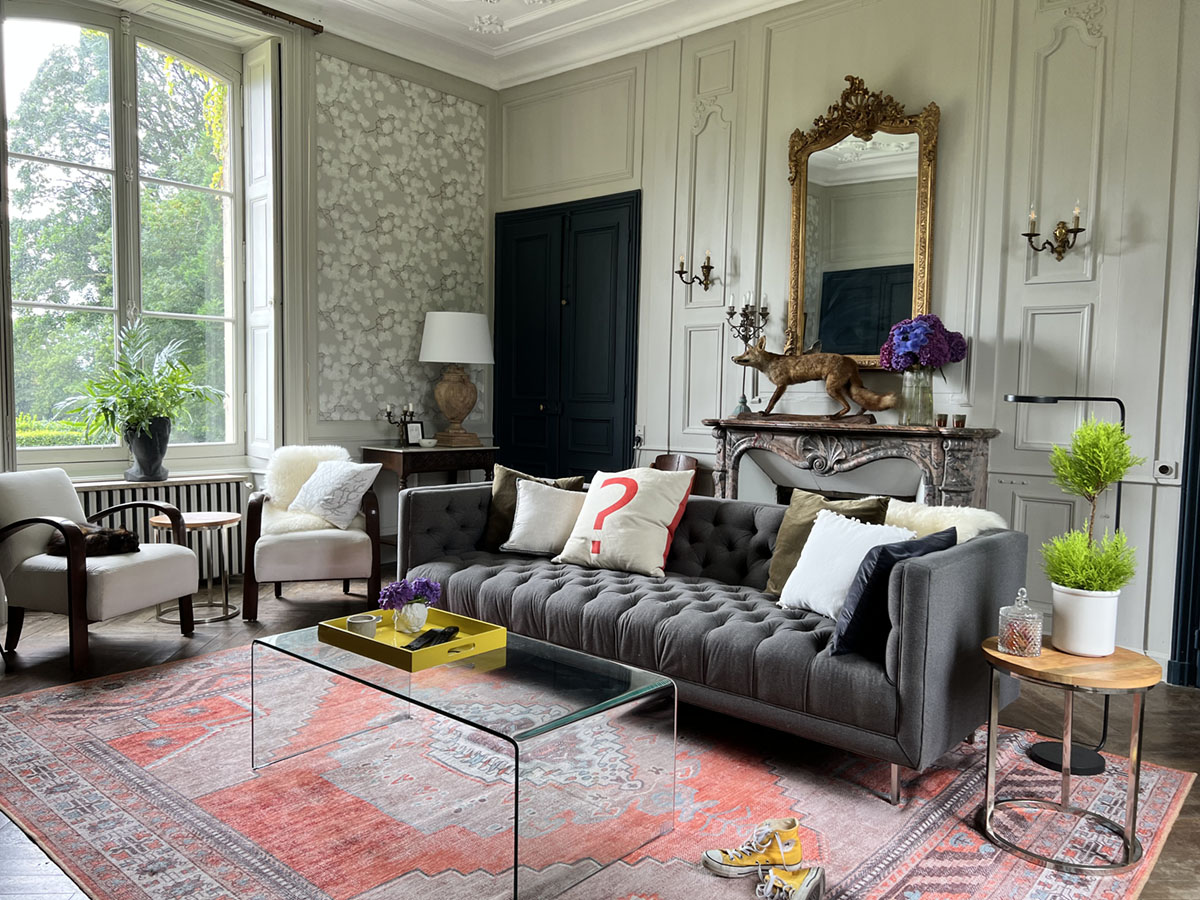
When renovating the chateau, Amanda and Lincoln wanted to preserve the character of the property – keeping its unique features while bringing in some more modern furnishings. ‘Our goal is to keep the bones of the house and not disturb any of the beautiful features in the mouldings.’ Amanda says.
‘And then with furniture you can mix things up, because I've always loved a mix of things. I've loved antiques my entire life – and I like modern furniture too. I think in a building like this if you can do it well, it works.
‘We were never after a whole period kind of home, you know – we don't want to live in a museum! This is a family home and we wanted to find comfortable furniture that's stylish and works for us as a family.’
Her favourite room renovation so far is the petit salon, which Amanda says was a ‘complete mess’ when they arrived. It took a long time to restore the room’s elaborate floral plaster ceilings, but the end result was well worth the effort.
They’ve loved discovering the history of the chateau, which was built in the 1850s on the site of an older castle.
In the attic, they came across lots of ancient documents shoved in a box, all in tiny French handwriting. They’ve also found antique furniture and Amanda was delighted to unearth some beautiful pottery buried under a tree.
The family have settled into French life, with the couple’s eldest daughter heading to a European university in the autumn. Amanda says her daughters now speak fluent French and love the European way of life.
Their family has grown to include nine cats, two dogs and a pair of donkeys. They spend most of their time in France, with occasional visits back home to the States.
Know what you're getting into
So what advice would Amanda give to anyone considering their own chateau renovation? ‘I think you just have to be aware of what you're getting into,’ she says. ‘You have to be fully committed. You have to be committed to get to know the building and the history.
‘Are you going to be a chateau owner who gets in there and does the work yourself or do you have deep pockets and you're just going to hire people to work for you?’
‘It's not just all about living in a chateau and having a glamorous life,’ Amanda adds. ‘There’s a lot of work to do.’
She says that sometimes people assume that they must be wealthy because they live in a chateau and try to charge them more for renovation work. However, she says lots of French people really value the work that they’re doing to bring the chateau back to life.
‘We were just speaking to a French person the other day and she said her family always told her: “Oh, you don't want to buy a chateau, you just don't want to open that can of worms.” The French people appreciate that we're here doing this and taking care of these old buildings.
‘Just be aware of what you're getting into – it'll end up costing you way more money than you ever think. Like any renovation!’
Amanda also recommends checking whether or not the chateau is protected under French law, as that can restrict what you’re able to do in terms of modernising the property. Although you can gain access to grants to help you restore your chateau.
Take your time
For Amanda and Lincoln, the renovation is a real labour of love. While they had some DIY experience before, they’ve learnt a lot through the experience of renovating Chateau Lingourdy.
‘You can really learn to do anything if you want to,’ Amanda says. ‘Our attitude is let's try to do it, as long as we don't really screw anything up too badly.
‘We're not in a hurry. We want to do things properly, so it might take us a little longer to do certain projects, but we're kind of learning as we go and we want to do things the right way – so the building is still standing in hundreds of years.’
You can follow Amanda and Lincoln’s adventures on their YouTube channel: Our French Chateau.
'Buying a chateau changed our lives – we wouldn’t go back if you paid us'
Moving into Chateau de Lalacelle was a life-changing experience for Terry Short and his partner Ashley Waters (both 39) – both say that they’d never move back to the UK.
The couple, both from Middlesbrough, ran a successful pet store before they moved to France for a slower pace of life.
They first looked at the chateau at the end of 2019 and at the time they felt that it was out of their price range, but when Covid hit they kept looking at the listing to see if it was still available.
Terry showed the listing to his mum, Tracy, and said: ‘How amazing would it be to live in a place like this and do it up?’ She agreed and they decided to go back and view the chateau.
‘The first boat out of lockdown, we were out of the country and we travelled to France,’ Ash says.
You know when you know
Before the pandemic, they had planned to view multiple chateaus in 2020, but Covid restrictions meant that they were only allowed to head to one destination when visiting France, so they decided to view Chateau de Lalacelle – and it was love at first sight.
‘As soon as we saw it we knew it was the right one and we put the offer in,’ Terry says.
Ash says he accompanied Terry to try and talk him out of it, as it was out of their budget, but he loved it even more than Terry did.
As soon as he saw the place, he realised that there was no way that it was going to sell for the price it was listed for and he began to get excited. ‘Then it was a real reality that we could make it happen,’ he says. ‘I ended up putting the offer in with the estate agent.’
‘I was still looking around and Ash had already put the offer in before I knew,’ Terry laughs.
For Terry, the main appeal of Chateau de Lalacelle was that many of the original features had survived. ‘It hadn’t been all ripped out and all painted white or modernised,’ he says. ‘It still had all of the original panelling, obviously it had all the original electrics, which wasn’t a good thing! It was that state where we could put our own stamp on it and work with it.’
Tackling major repairs
Although many period features had survived, the chateau was in a precarious condition. The roof and chimneys were about to fail and the doors had collapsed, leaving the building open to the elements.
‘If it had been left for another year, the chimneys would have collapsed in and it would have been game over for the place,’ Terry says.
Their first priority when they bought the chateau was to repair the chimneys and the roof to make the place safe. Apart from those issues, the building was structurally sound.
When they first moved in, they had to live in tents without access to running water or power. Then they spent 18 months living in a caravan in the chateau grounds.
They had to clear the grounds, which was an extensive job as it was all overgrown. With 24 acres to maintain, they’ve had to buy a tractor to keep on top of the mowing.
Room to grow
For Ash, the land was the main selling point of the chateau: ‘The land was the one thing I wanted, to be able to be free. In the long term, we can be completely self-sufficient here. We’ve got our own running water, we’ve got everything we need. If we want to grow our own fruit and veg, everything – we have it all here.’
Terry says that the chateau had everything the family wanted for their dream life in France. His mother had always wanted a little cottage in the countryside, he wanted the chateau and Ash wanted the land. Chateau de Lalacelle had it all.
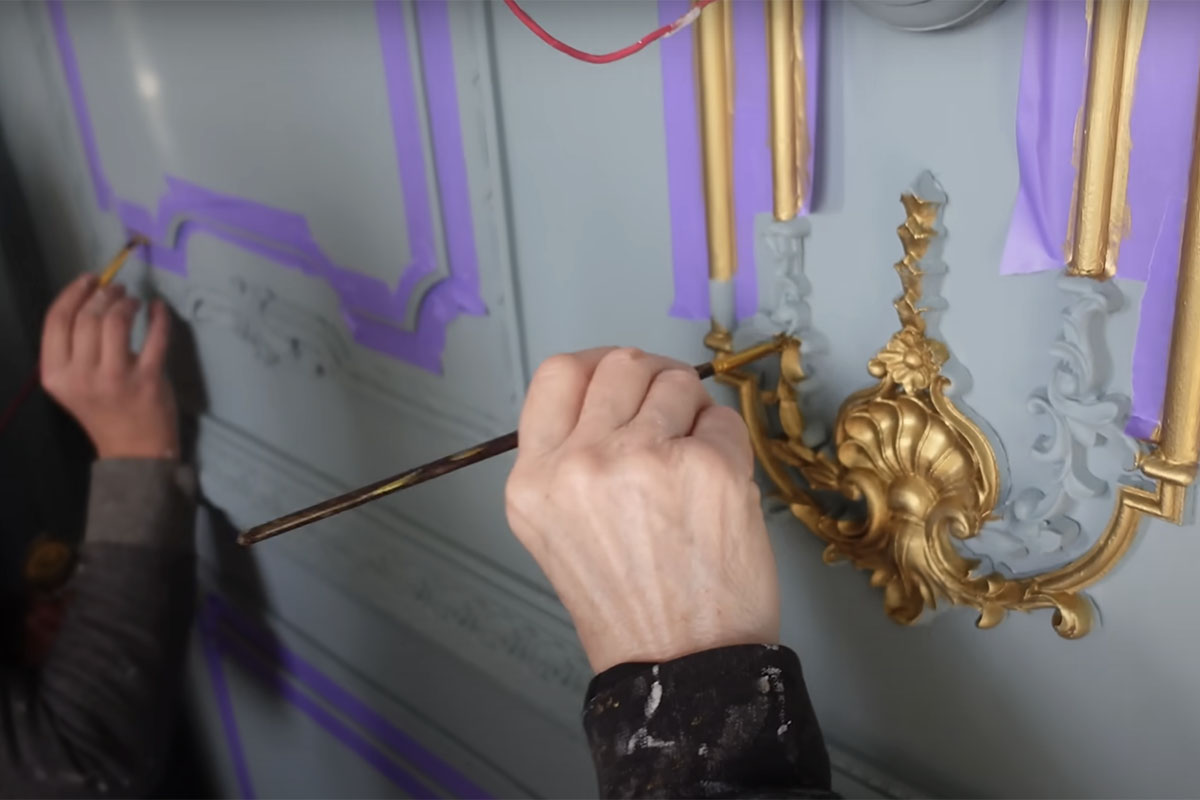
The couple are renovating the chateau in a way that reflects its history and the period in which it was built.
The property isn’t listed, which gives them a lot of freedom to restore the chateau the way they want, without having to worry about any legal restrictions.
They do all of the work themselves, apart from anything which needs to be done by professionals for structural or insurance purposes.
There’s still a lot of work to do – one of their top priorities was to renovate a cottage where Terry’s mum now lives with his nephew.
Restoring with care
Recently, they opened up the chateau to show the locals what they’d done and Ash said that his favourite part of the renovation so far was seeing their reactions.
He says that they appreciate the work that they’re trying to do. ‘If we’d just come in and renovated the place, we’d have been done in two years,’ he says. ‘But we’re trying to respectfully restore it. And I think that’s the thing that’s pleasing and rewarding about it – it’s a restoration.’
Like any chateau renovation, there were a few surprising discoveries. They’ve found ancient wallpaper that dates back to pre-1806 when panels were installed and even imprints of old newspapers on the walls. They found a WW2 snuff box in the lake and even bullet casings from wartime machine guns.
Their followers on YouTube have pieced together the chateau’s history all the way back to 1709. There’s even some parts of the building which date back to the original 13th century chateau.
The full chateau experience
Their long-term plan has always been to open the chateau as a hotel with apartments to rent. They decided not to offer individual rooms to guests, as they felt that it wouldn’t give them the full chateau experience.
So far, two beautifully styled suites are available to book. If that goes well, they’re considering setting up chalets in the grounds as well.
The chateau decor has a surprising influence: the RMS Titanic. Terry wanted to bring in some of the styling that they used in the Titanic’s cabins. They had Louis XV and Louis XVI rooms, as well as Regency and Georgian-themed rooms. They’ve also taken inspiration from other chateaus and the Palace of Versailles.
The interior design is largely Terry’s territory – he has a vision of how he wants each room to look, but he asks the family what they think of all the details from the fabric choices to the furnishings.
‘Terry’s very aesthetic and I’m very practical,’ says Ash. ‘That’s why it works well between us. We always end up in the middle somewhere.’ Whenever they can’t make a decision, Terry’s mum Tracy is the referee.
Ash and Terry's top tips
What advice do Ash and Terry have for other families who want to escape to a French chateau? Terry says that if they’d known about the chateau’s problems, they might not have taken the plunge, but they don’t regret their decision to buy. ‘Our advice to anyone that wants to do it is: just go for it,’ Ash says.
Terry agrees: ‘You only have one life and you need to enjoy it, so if it doesn’t work out then at least you’ve tried and you can go on to something else.’
For them, the chateau move has been life changing. Ash says that people shouldn’t expect to live the way they did back home: ‘We love the French way of life. Our most difficult time was the first six months when we came, because we were so headstrong and living our British way of life. Just being able to do something or get something – everything’s on demand in the UK and the US is the same.
A slower way of life
‘I think you have to accept that France is different, and as soon as you live the French way of life – life is so easy here. It’s so much more harmonious, peaceful and easy. If you come over here with the aspiration of living your own life, it won’t work for you.’
The pace of life has made them slow down – they don’t set deadlines for the renovation, as they can’t control every aspect of it. If they need windows, they have to be made specially, which takes time and money.
Terry says that you need to think of your budget and double it, then double it again and that’s how much your renovation is likely to cost.
They both agree that they wouldn’t change their decision to move to France. ‘There’s no amount of money that you could pay me right now to move back to the UK,’ Ash says. ‘If you offered me £100m to move back to the UK right now, I’d still say no.’
They’ve fallen in love with the rural French way of life and find the local people very friendly. ‘I went back to the UK recently for 18 hours and I was in a city surrounded by thousands of people, and not one person said hello,’ Ash says.
‘Here I’ll go to the local shops and I’ll spend 20 minutes just saying hello to people, asking how they’re doing and about their day. People still care about each other and there’s a completely different vibe here.’
You can follow the family’s adventures on their YouTube channel, Escape To The Dream, Restoring The Château, and book a stay on their website.
How to buy a chateau
So, what do you need to think about if you’re considering buying a chateau? Mike Braunholtz of prestigeproperty.co.uk works with buyers interested in castles in France.
He says: ‘People should think clearly about why they are buying a château as it is a completely different proposition to many other types of real estate, especially if the buildings are designated as historic.
‘If there is to be a commercial component such as a wedding venue, bed and breakfast or similar enterprise then a business plan is essential. The buyer should consider the investment required to bring its accommodation and catering facilities up to speed, as well as the number of rooms.’
Undertaking renovations
If you’re buying a chateau in a bad state of repair, Mike recommends choosing a property where major repairs have already been completed. It’s important to make sure the roof is sound.
Renovations can be expensive, so Mike suggests finding ways to raise money using your property. ‘Hundreds of acres of suitable land is often a big bonus as it can provide a rental income from local farmers that may offset the cost of necessary improvements. Another source of income is unused outbuildings that could be turned into further guest accommodation to provide further income streams to support the estate.’
Local knowledge
Patrick Joseph, founder of my-french-house.com, advises potential chateau owners to research the area they want to live in before they buy.
‘From walking to the nearest boulangerie to accessing an airport quickly, everyone has different priorities when it comes to their ideal home in France,’ he says.
‘Luckily, there are so many chateaus across the country that you will be able to find exactly what you need. Research flights, ferries and other transport options as well as local villages, towns and cities in the area before you make your choice.
‘Many chateaus were built within easy reach of Paris so their owners could travel to and from the capital – something which is equally attractive today.’
Read more:
